Collection of Paper Nativity Scenes

Paper nativity scenes represent an important expression of folk and popular visual culture. Their tradition dates mainly back to the 19th century, when, thanks to the development of printing and the availability of paper, nativity scenes began to spread into households. This simple material made it possible to create rich depictions of the birth of Jesus Christ, which gradually became part of Christmas traditions in many families.
The collection of paper nativity scenes by Ján Hertlík presents various types and forms of these works – from historical prints to contemporary interpretations. It showcases a diversity of artistic styles, compositions, and methods of processing. Some nativity scenes are flat, while others create spatial compositions featuring numerous figures, architectural elements, and landscapes.
The aim of the collection is to document and present the tradition of paper nativity scenes as part of cultural heritage. A nativity scene is not merely a decorative object, but also a carrier of symbolism and narrative, passed down in various forms from generation to generation.
Creation of Paper Nativity Scenes
A paper nativity scene is created through a gradual process that combines artistic creativity, craftsmanship, and attention to detail. The result is a composition depicting the scene of Christ's birth, including the Holy Family, shepherds, the Three Wise Men, animals, and other figures.
Design and Composition
Each nativity scene begins with the design of the overall composition. The arrangement of figures, architecture, and landscape is carefully planned to achieve a harmonious result. The choice of artistic style also plays an important role.
Cutting
After printing, the process continues with the precise cutting of individual elements. This is a crucial stage that requires patience and accuracy in order to preserve the fine details of each figure
Assembly of the Scene
The cut-out elements are gradually assembled and fixed into a spatial composition. Some parts are layered or bent to create a three-dimensional effect, giving the scene depth and a more lifelike appearance.
Finalizing the Environment
In the final stage, landscape and decorative elements are added – such as trees, palm trees, sheep, the star, architectural details, or additional figures. These elements help create the atmosphere and complete the overall character of the nativity scene.
Tradition and Cultural Heritage
Paper nativity scenes represent a unique combination of visual art, craftsmanship, and folk tradition. Even today, new nativity scenes are created, building on historical models while also introducing new artistic approaches.
Collections of paper nativity scenes thus contribute to preserving this tradition and allow the public to explore the many different forms of nativity art.
Examples of Paper Nativity Scenes in the Collection
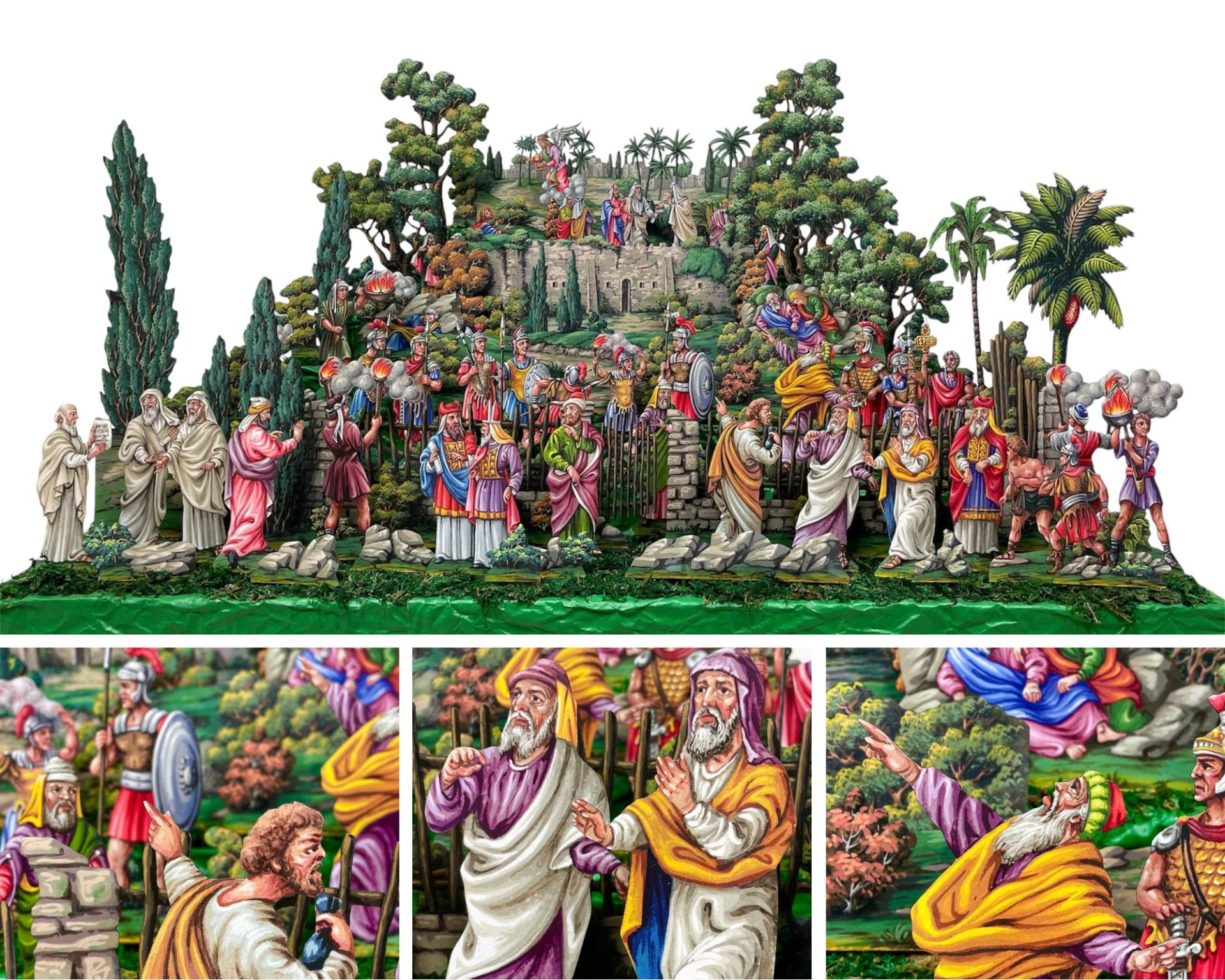
Lenten Nativity Scene by Jiří Knapovský
It depicts the scene of the arrest of Jesus Christ in the Garden of Gethsemane. The scene captures the moment when soldiers come to arrest Jesus, marking the beginning of the story of his suffering. The figures represent key moments of the Easter narrative.
It is associated with Easter, and similar scenes are very rare among collectors, which makes this nativity scene a unique piece.
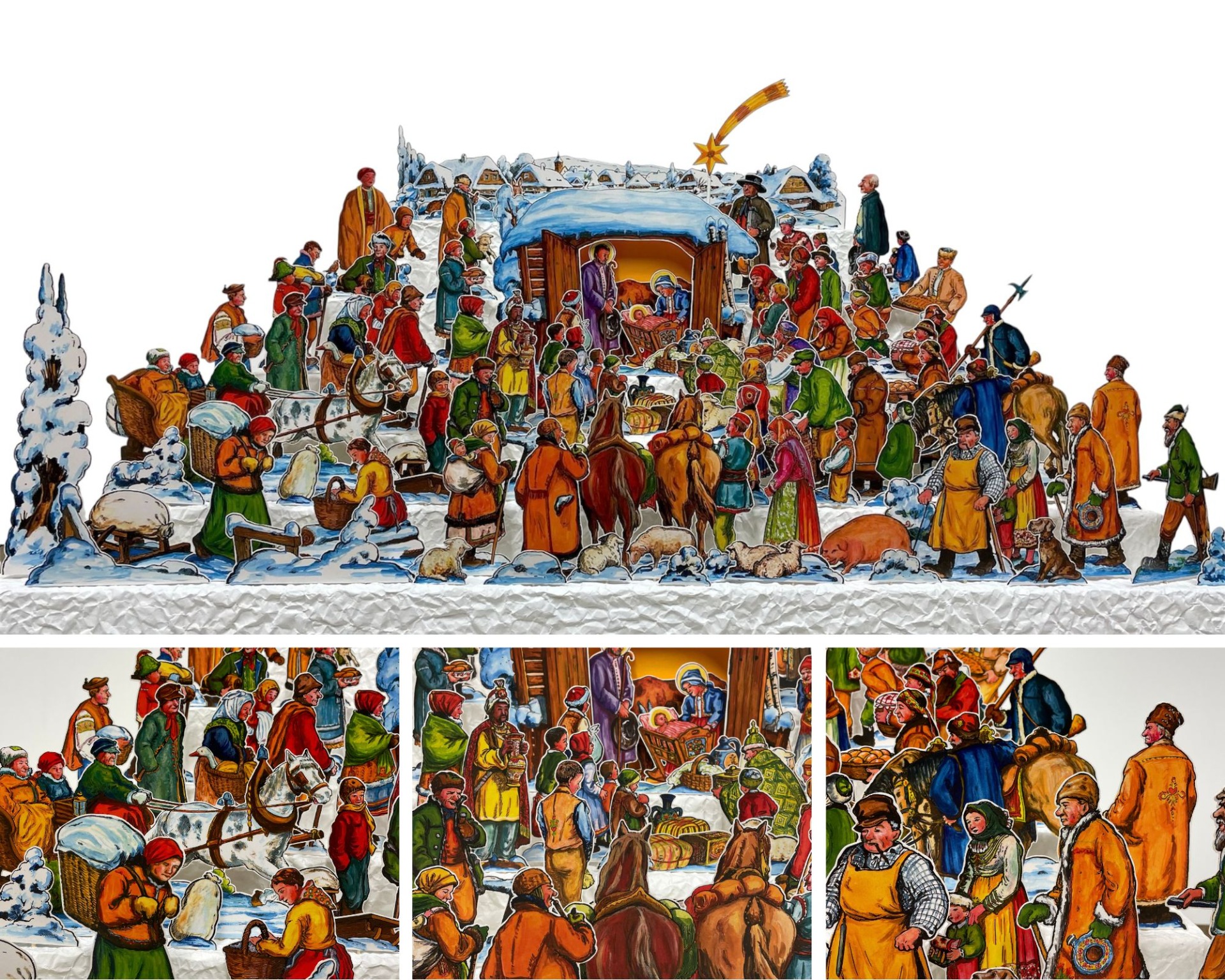
Coloured Rural Nativity Scene
This nativity scene with 105 figures was created by Czech painter Cyril Kotyšan, with colouring completed by Jaroslav Herain. This Czech nativity scene is set in a winter landscape that evokes the atmosphere of the countryside during Christmas.
The rich composition of figures and details depicts traditional rural life while also highlighting the story of the birth of Jesus Christ.
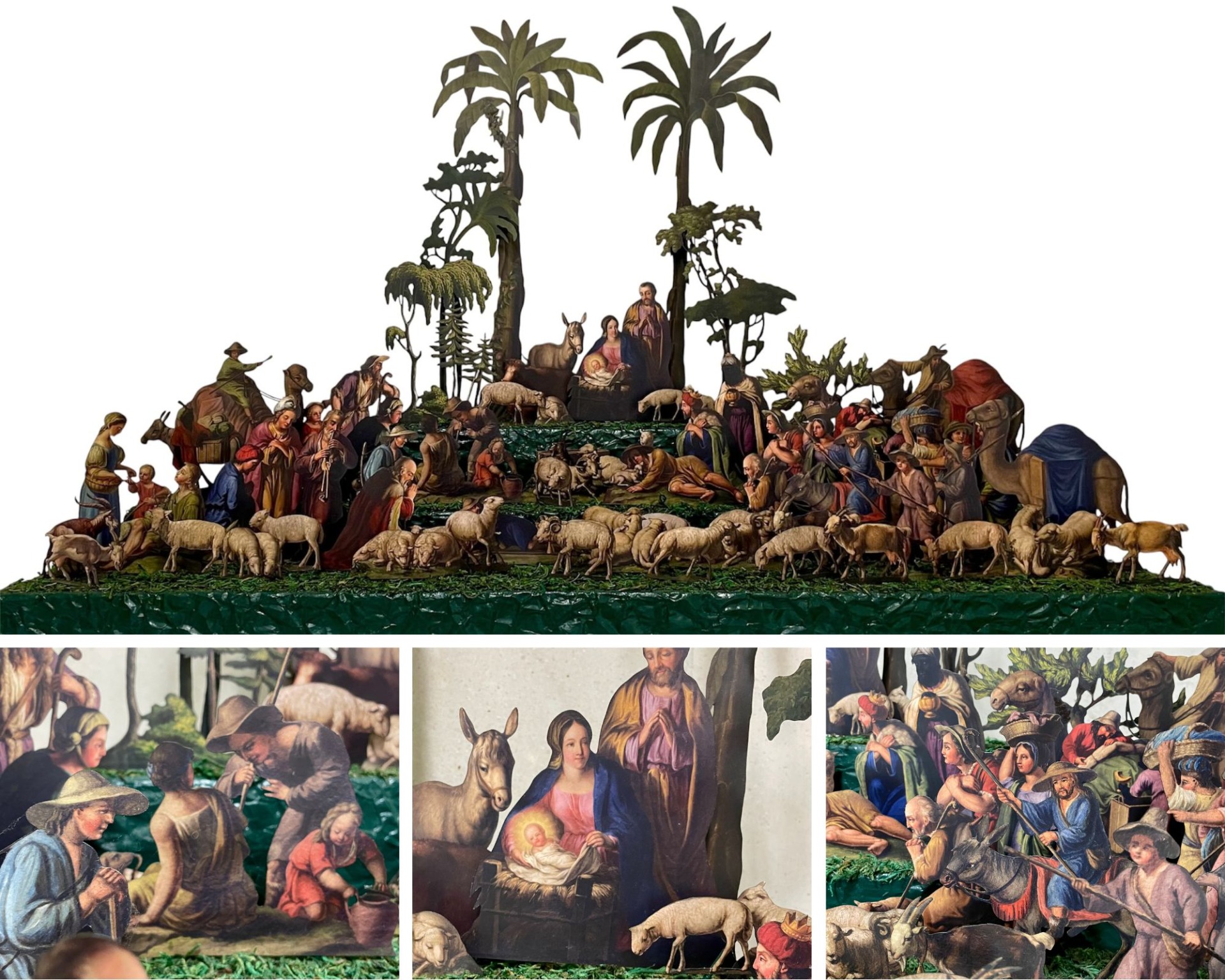
Nativity Scene by Jakob Ginzel from Liberec
A rich composition depicting the birth of Jesus Christ, surrounded by shepherds, pilgrims, animals, and oriental figures bringing gifts. This historical nativity scene stands out for its detailed craftsmanship of the figures, an exotic landscape with palm trees, and the vibrant atmosphere of a traditional historical nativity display.
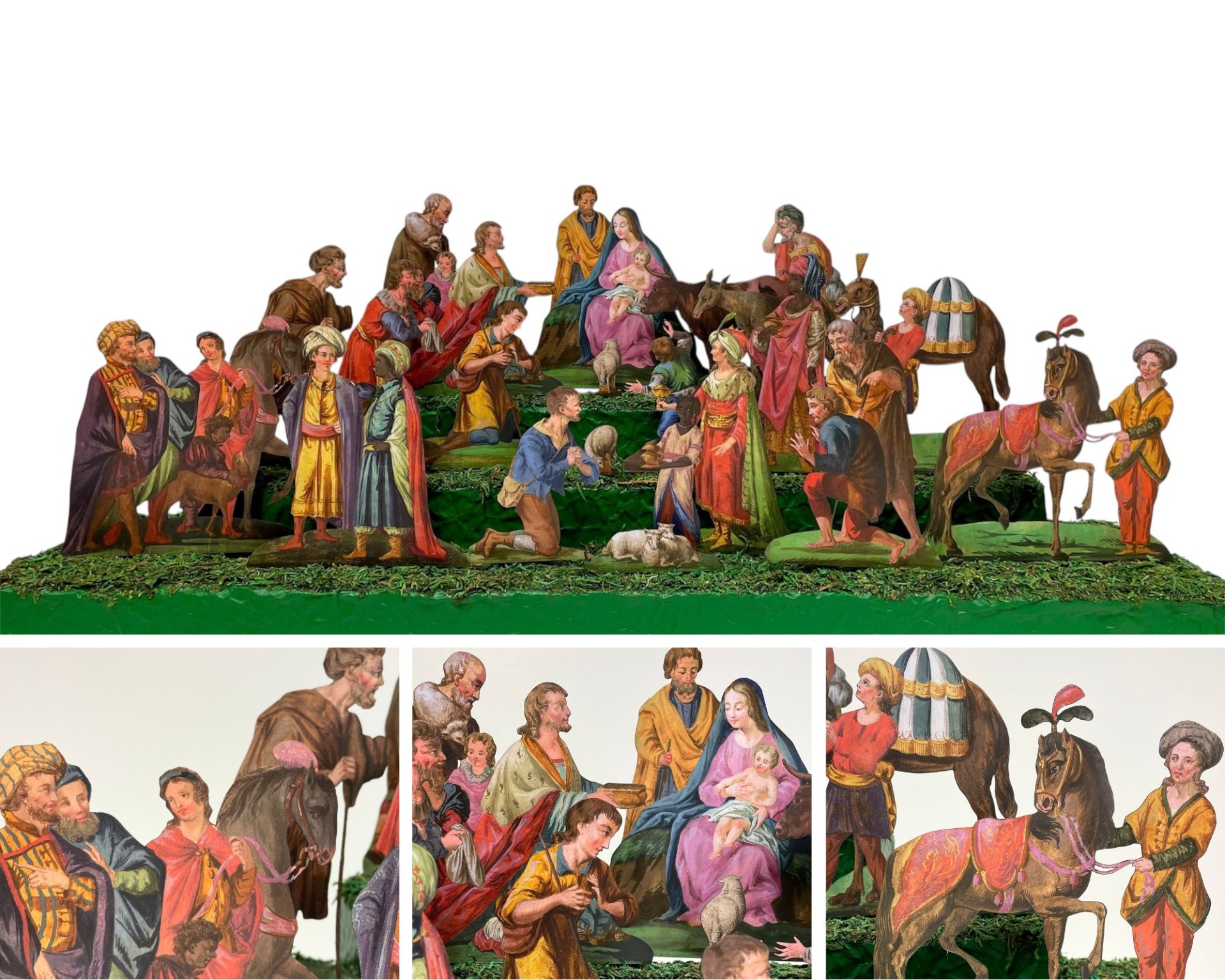
Tyrolean Baroque Nativity Scene
It depicts the birth of Christ through finely crafted paper figures. Each figure is meticulously detailed, faithfully capturing the expression and movement characteristic of the Baroque style. The entire nativity scene has a charming and decorative appearance, emphasizing the aesthetics and elegance of Tyrolean Baroque.
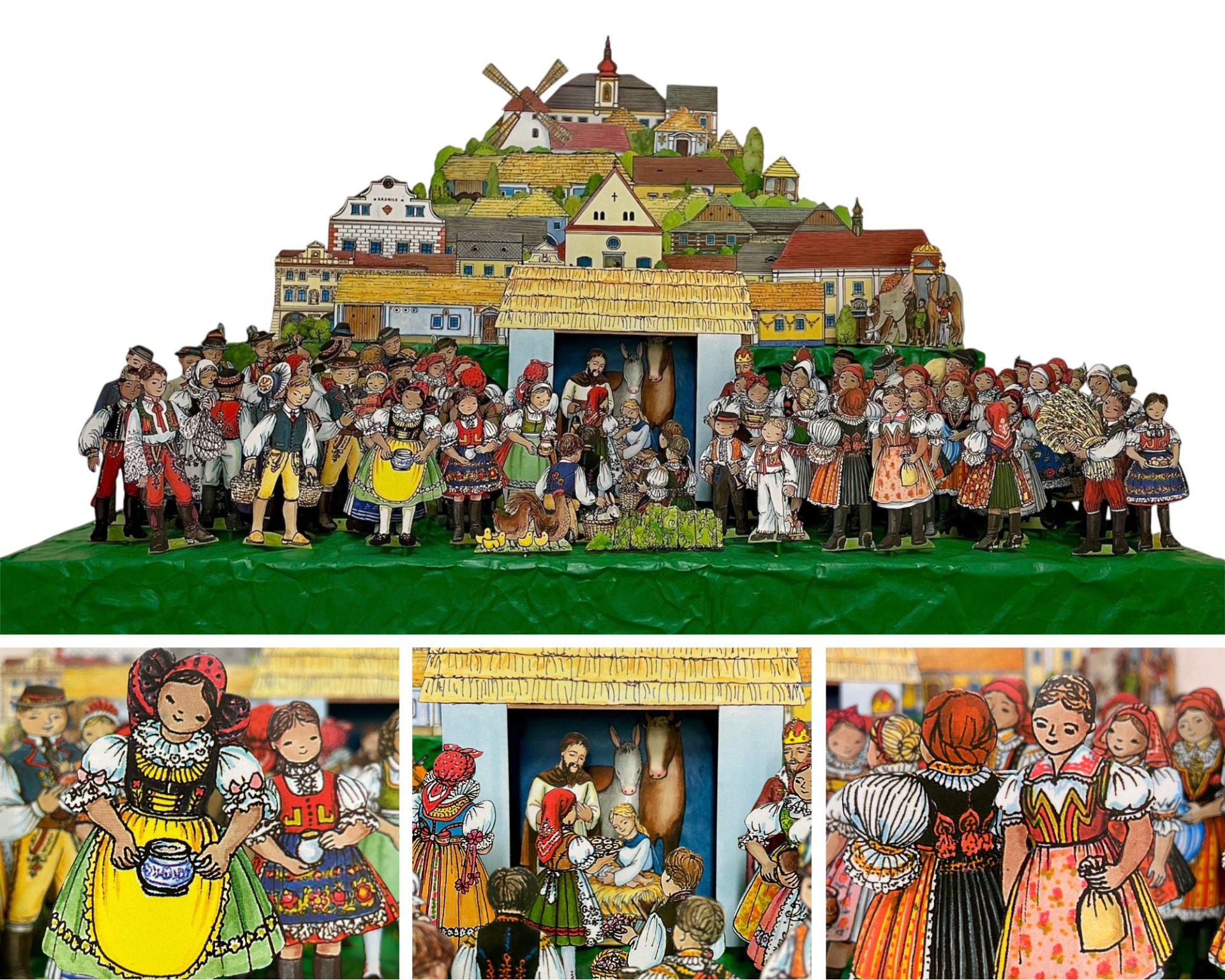
Ethnographic Nativity Scene of the Moravian-Silesian Region I by Helena Horálková
It depicts the birth of Christ set in an environment typical of the Moravian-Silesian region. The figures are dressed in traditional folk costumes, and the architecture faithfully reflects the appearance of local villages. The nativity scene thus combines a religious theme with an authentic portrayal of the life and culture of the Moravian-Silesian region.
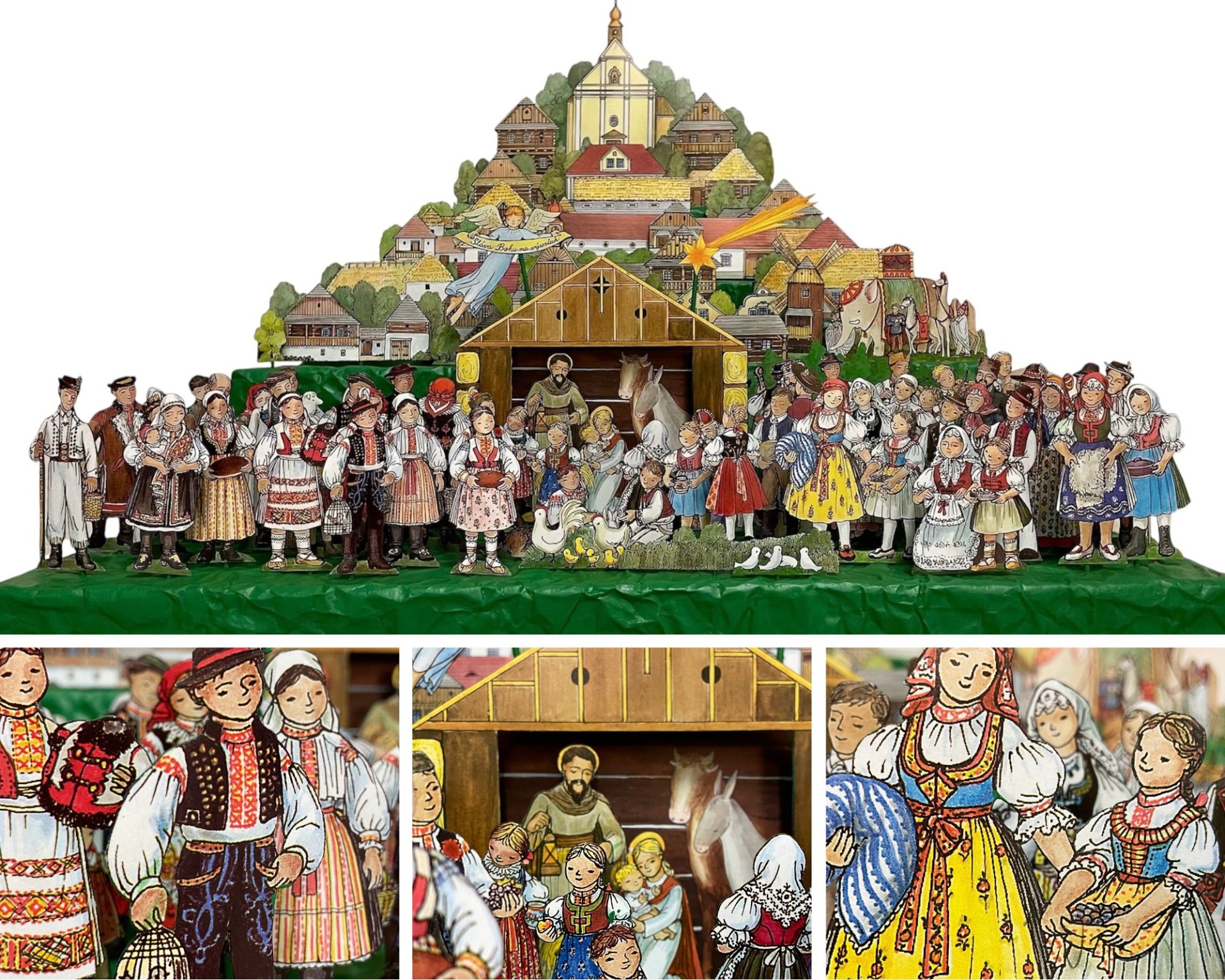
Ethnographic Nativity Scene of the Moravian-Silesian Region II by Helena Horálková
The second part of the nativity scene develops the moment of the arrival of shepherds and villagers, who come to welcome the newborn Christ. The figures, dressed in Moravian-Silesian folk costumes, bring gifts and create a vivid image of everyday life and regional traditions. The entire composition emphasizes the connection between the Christian story and the folk culture and setting of the Moravian-Silesian region.
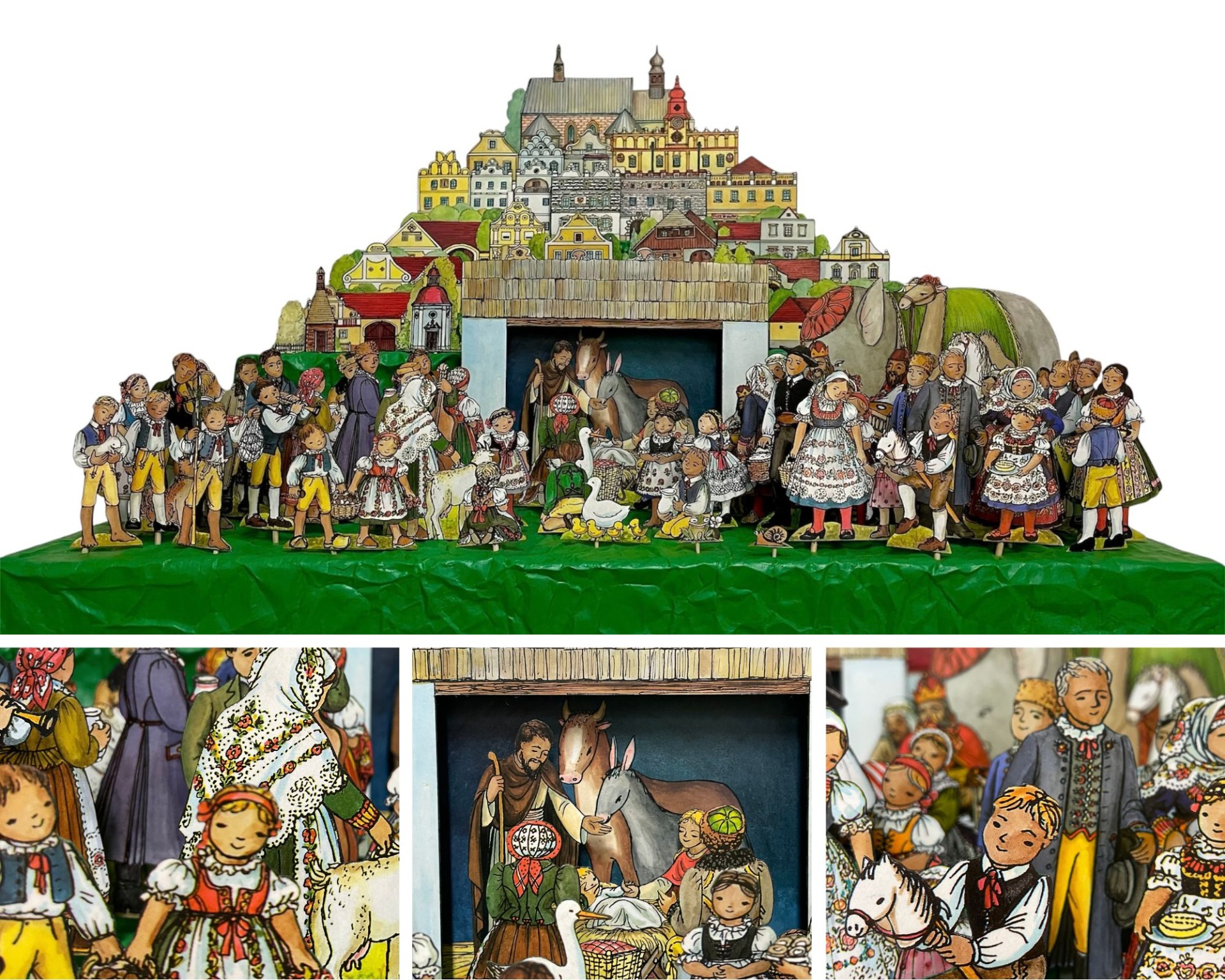
Ethnographic Nativity Scene of South Bohemia by Helena Horálková
It depicts the birth of Jesus set in the environment of South Bohemia. The figures are dressed in traditional folk costumes, complemented by rich architecture typical of South Bohemian villages. The nativity scene combines a Christian motif with folklore and evokes the cultural traditions of this region.
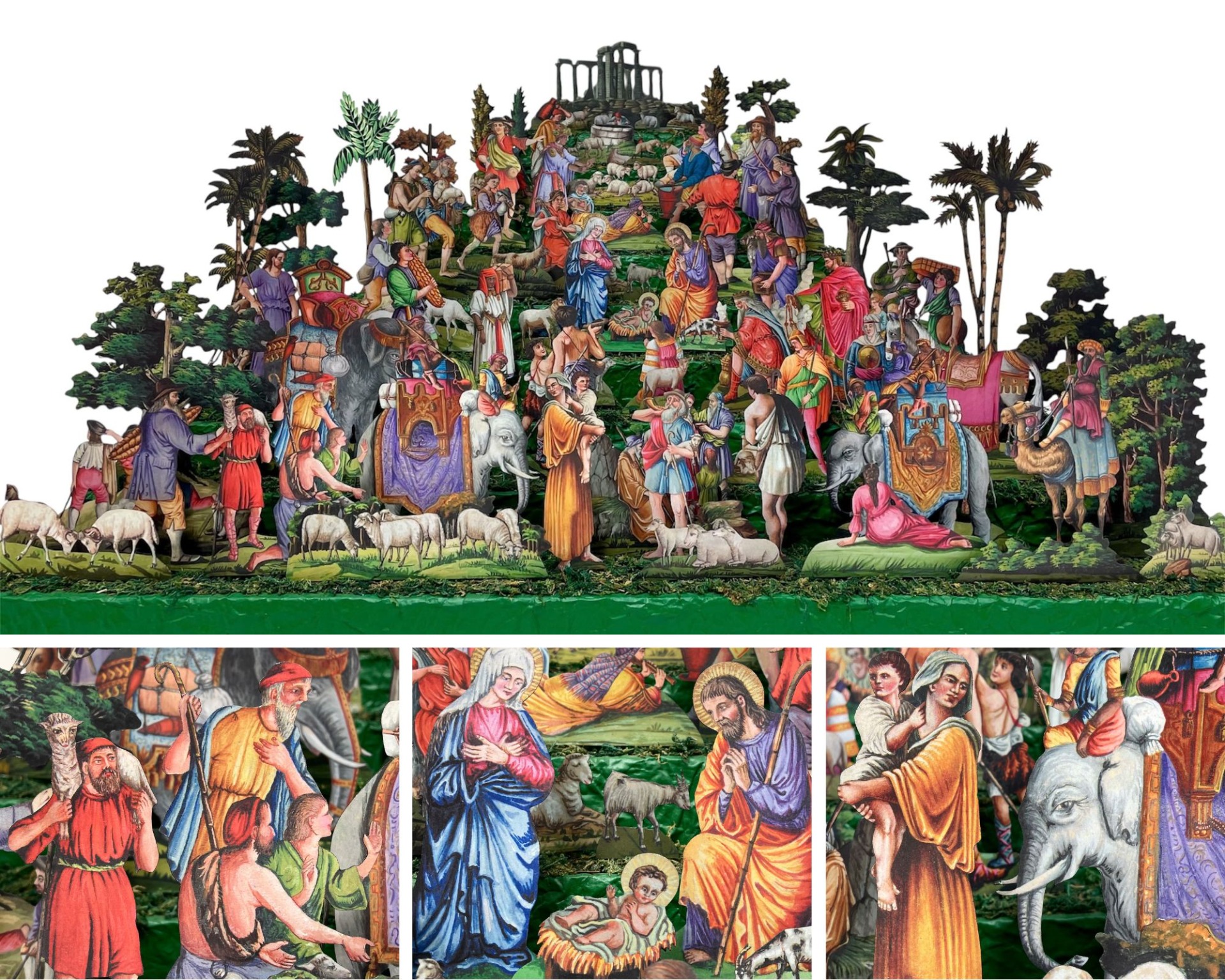
Historic Paper Nativity Scene from the Turnov Region
It is one of the notable examples of traditional folk craftsmanship in Czech nativity scenes. It stands out for its large composition featuring numerous historical figures and three large elephants, which give the scene an oriental and festive character. Above the Nativity scene, an acropolis is depicted—an unusual architectural element that symbolically emphasizes the significance of the birth of Christ.
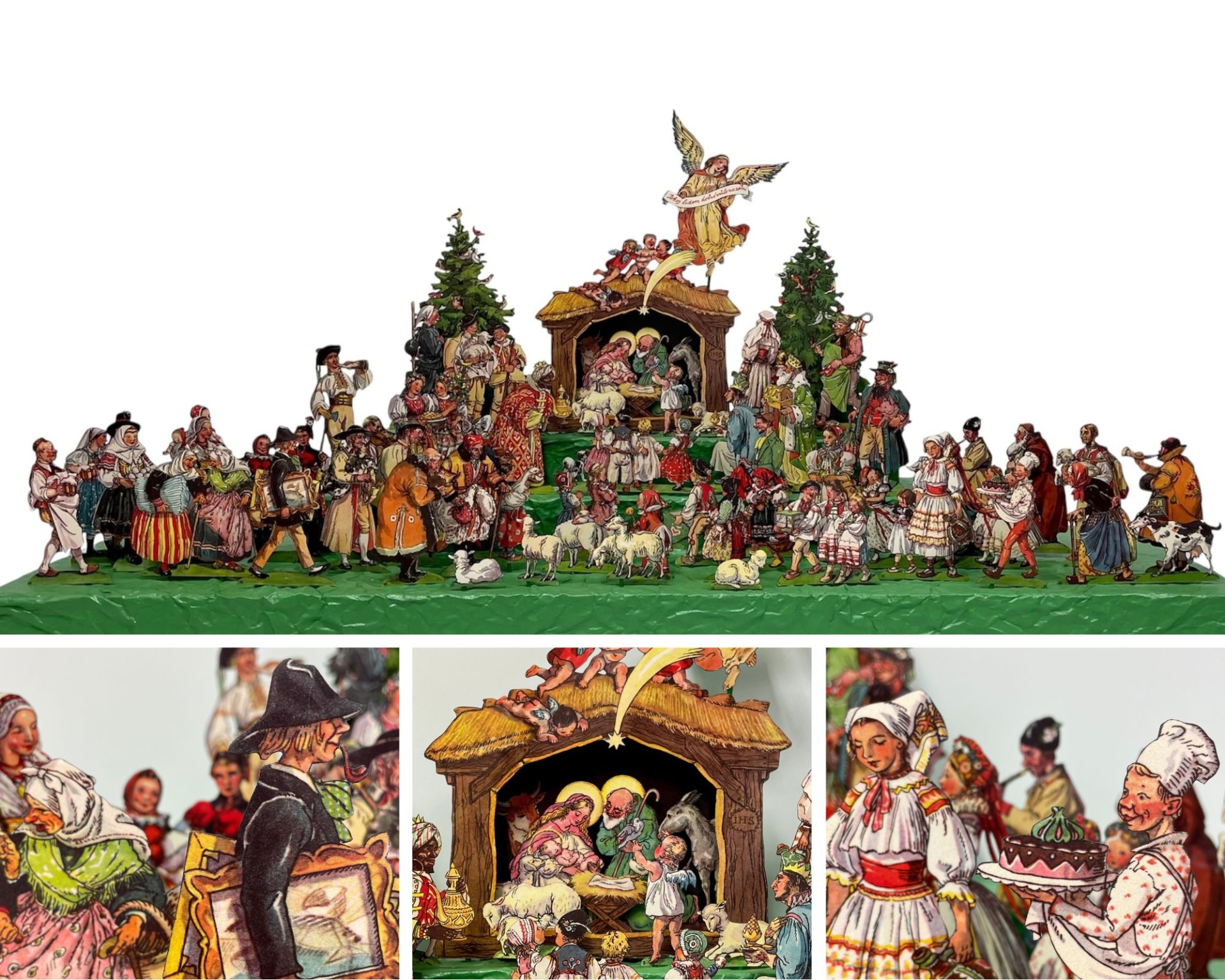
Ethnographic Nativity Scene by Marie Fischerová Kvěchová
In its opening scene, it depicts the peaceful setting of the birth of Christ, framed by two trees that create a natural border for the entire composition. The figures are rendered in a delicate illustrative style typical of the artist's work, evoking the atmosphere of the traditional countryside. The scene feels harmonious and introduces the viewer to the nativity story with an emphasis on simplicity, tranquility, and a folk-inspired ambiance.
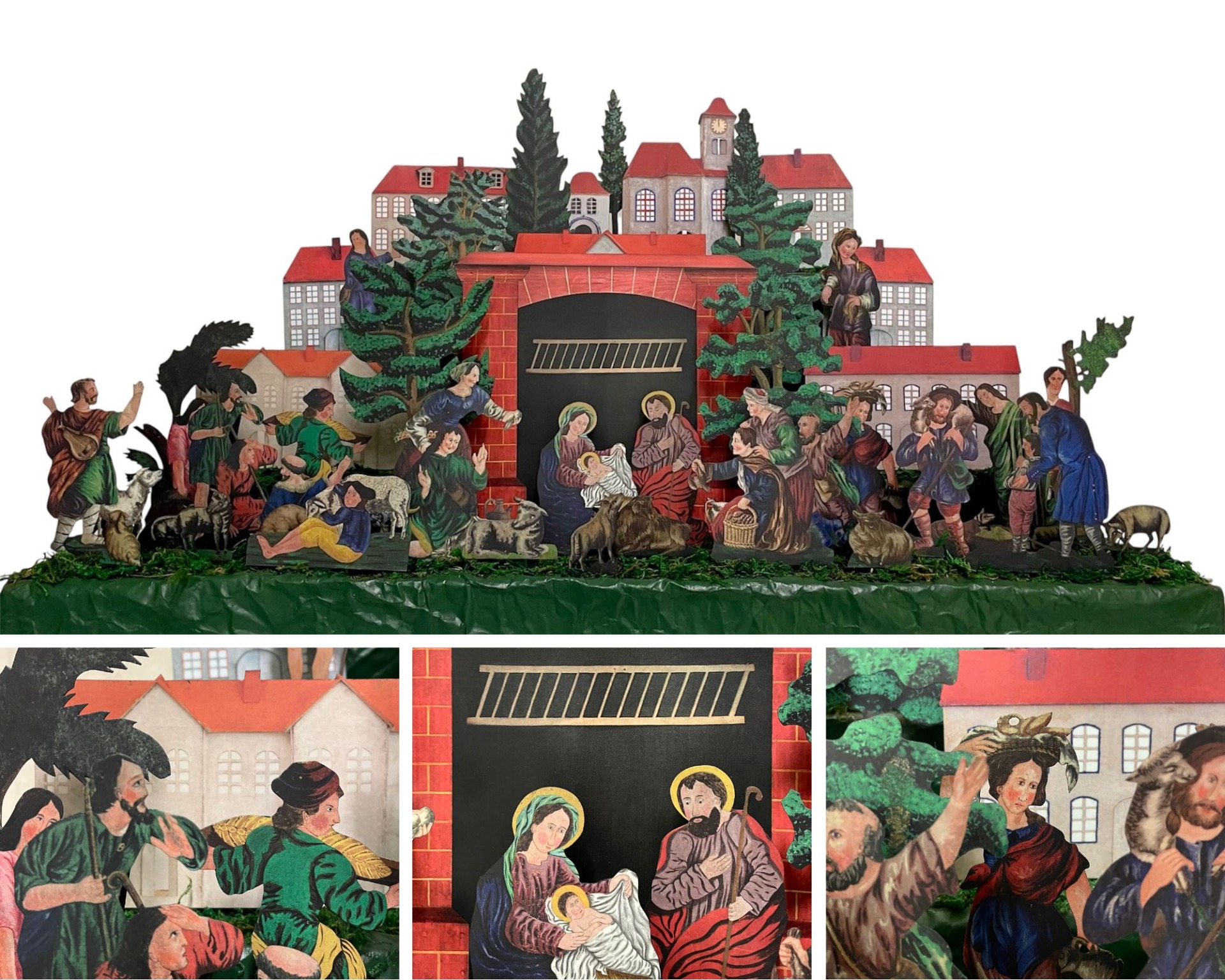
Historic Nativity Scene from Paseky nad Jizerou
It is remarkable for its figures crafted in the spirit of naïve folk art. The figures are intricately painted and appear simple, yet highly expressive and lively. Above the Nativity scene rises a rich arrangement of houses and buildings, creating an impressive scenic backdrop for the entire nativity display.
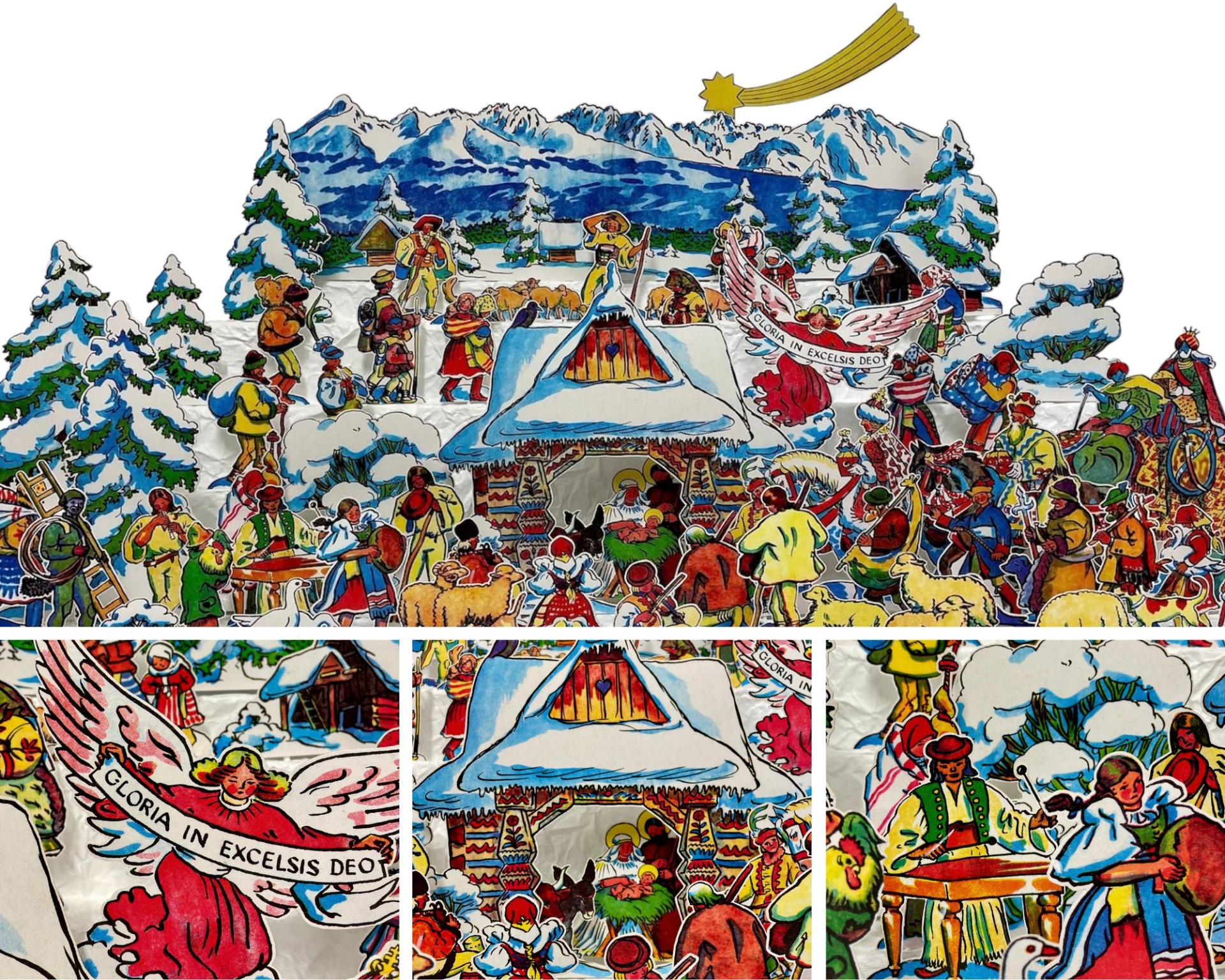
Paper Nativity Scene from Važec by Ján Hála
It is an artistic work inspired by the life and traditions of the village of Važec in the Liptov region. The author, painter Ján Hála, depicts the biblical story of the birth of Jesus set in the environment of the Slovak countryside, with figures dressed in traditional folk costumes. The nativity scene represents a significant fusion of Christian symbolism and regional folk culture.
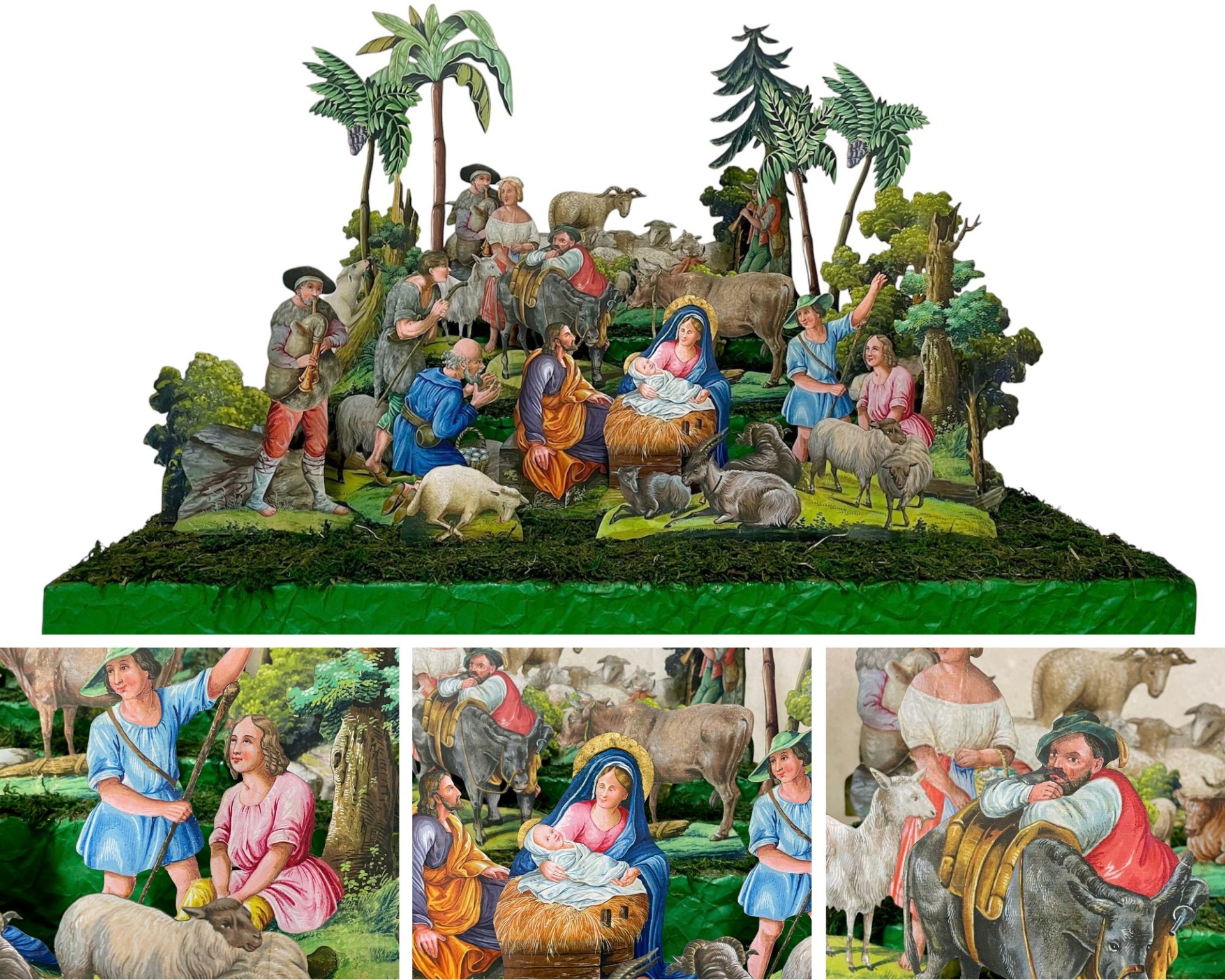
Historic Paper Nativity Scene from the Czech Netherlands
It is dated approximately to the 18th century and ranks among the oldest preserved paper nativity scenes in Central Europe. It is characterized by delicate drawing, hand coloring, and detailed depictions of biblical figures. It represents an important part of the tradition of displaying nativity scenes during Christmas in both homes and churches.
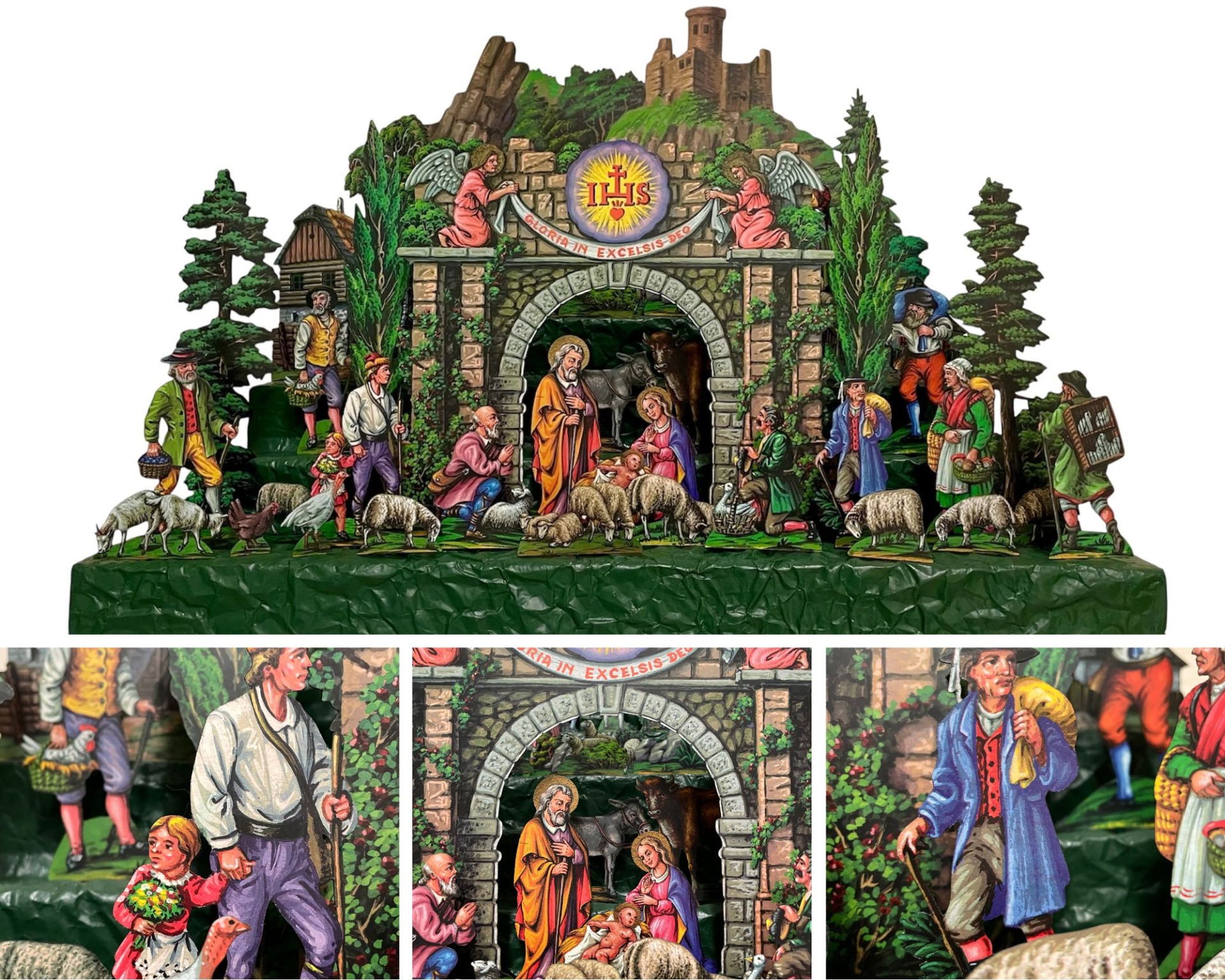
Knapovský Paper Nativity Scene
is one of the simpler paper nativity scenes from the Ústí nad Labem region. It is characterized by a smaller number of figures and a clear composition that focuses attention on the scene of the birth of Jesus. This type of nativity scene was mainly intended for home display during Christmas.
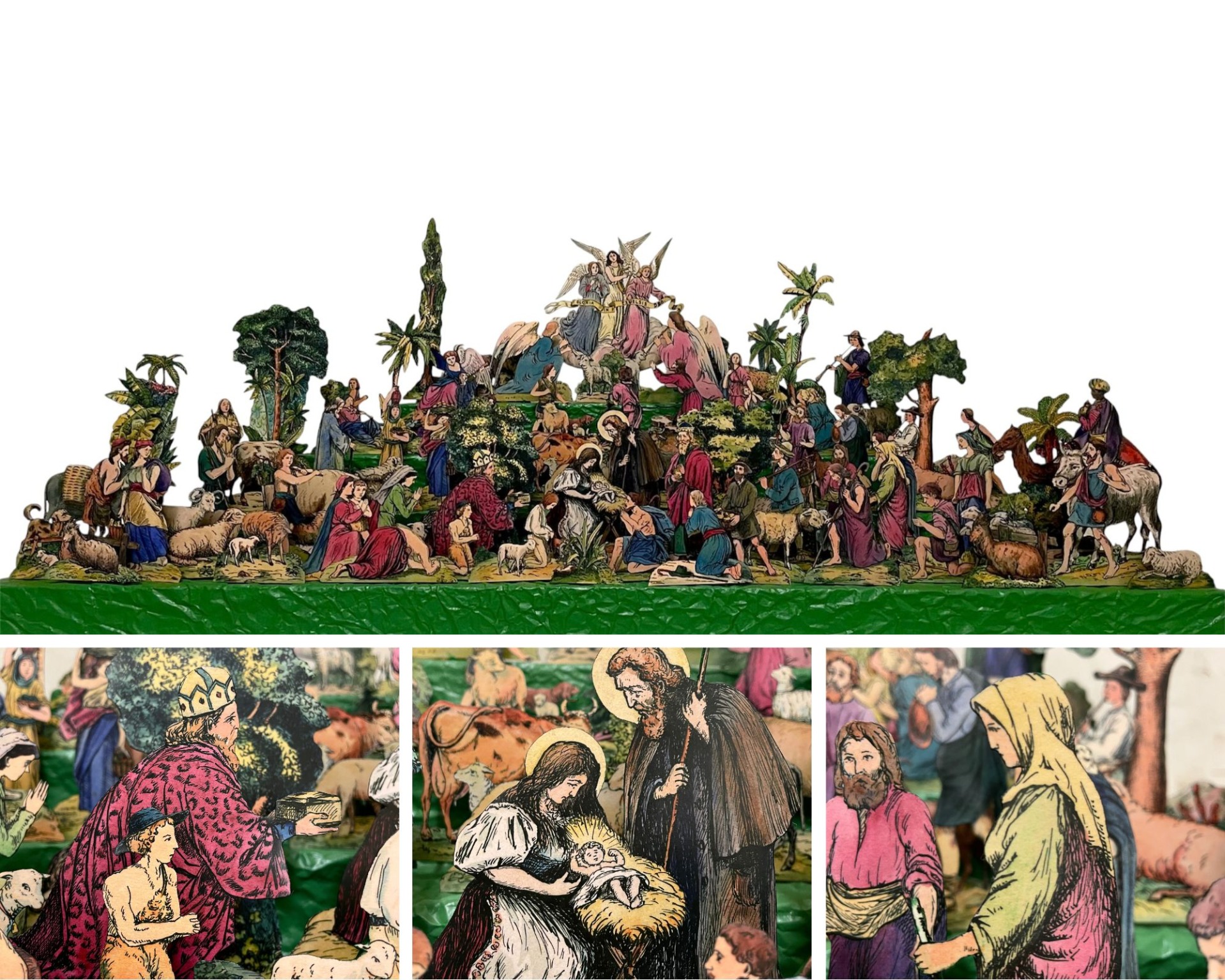
Šrámek's Paper Nativity Scene
is a Czech paper nativity set whose central scene features angels surrounding the birth of Jesus Christ. The figures are depicted in historical garments that resemble period clothing and give the scene an authentic atmosphere. This nativity scene is among the traditional Czech paper nativities and represents a blend of folk devotion and visual art.
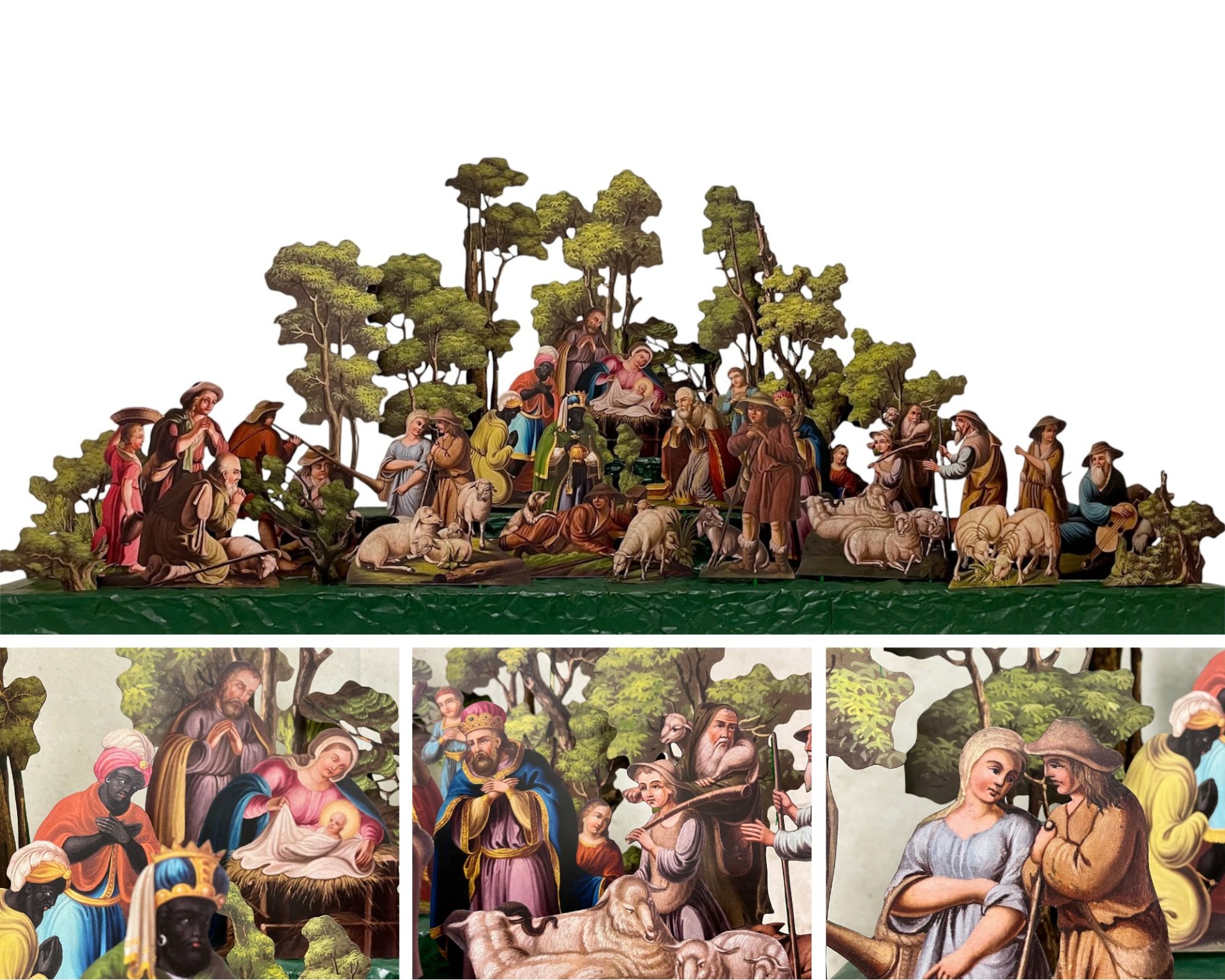
Liewehr's Paper Nativity Scene
is one of the historical printed nativity scenes originating from Liberec. The central scene of Christ's birth is complemented by prominent trees that create a distinctive frame for the entire composition. This nativity scene stands out for its calm atmosphere and the harmonious arrangement of figures and natural elements.
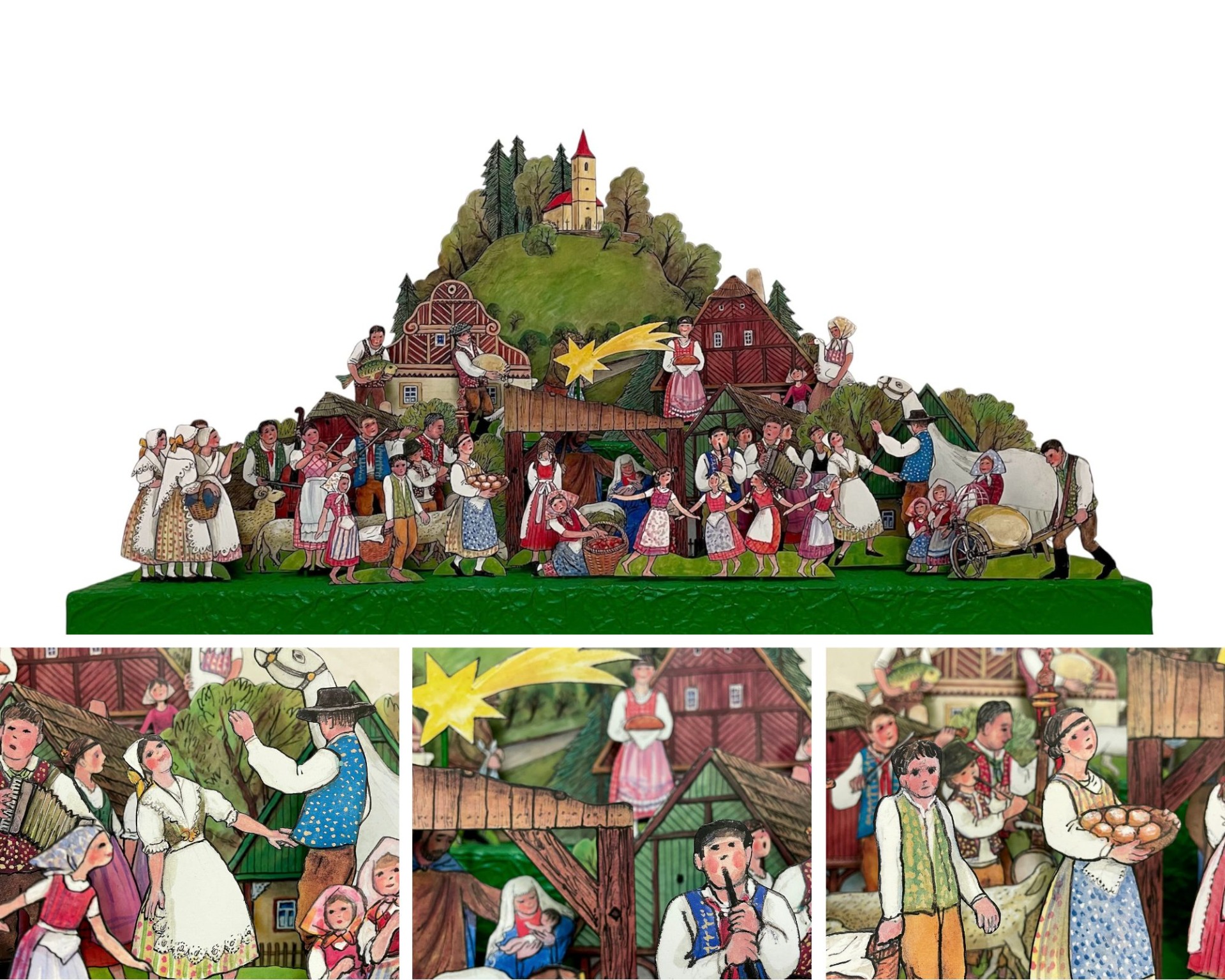
The Paper Nativity Scene by Jiří Škopek
depicts the traditional figures of the birth of Jesus with an emphasis on folk costumes. The scene also includes the Hořeňák folklore ensemble from Lázně Bělohrad, which adds an authentic folkloric atmosphere. The nativity scene combines careful artistic craftsmanship with the rich cultural tradition of the Czech countryside.
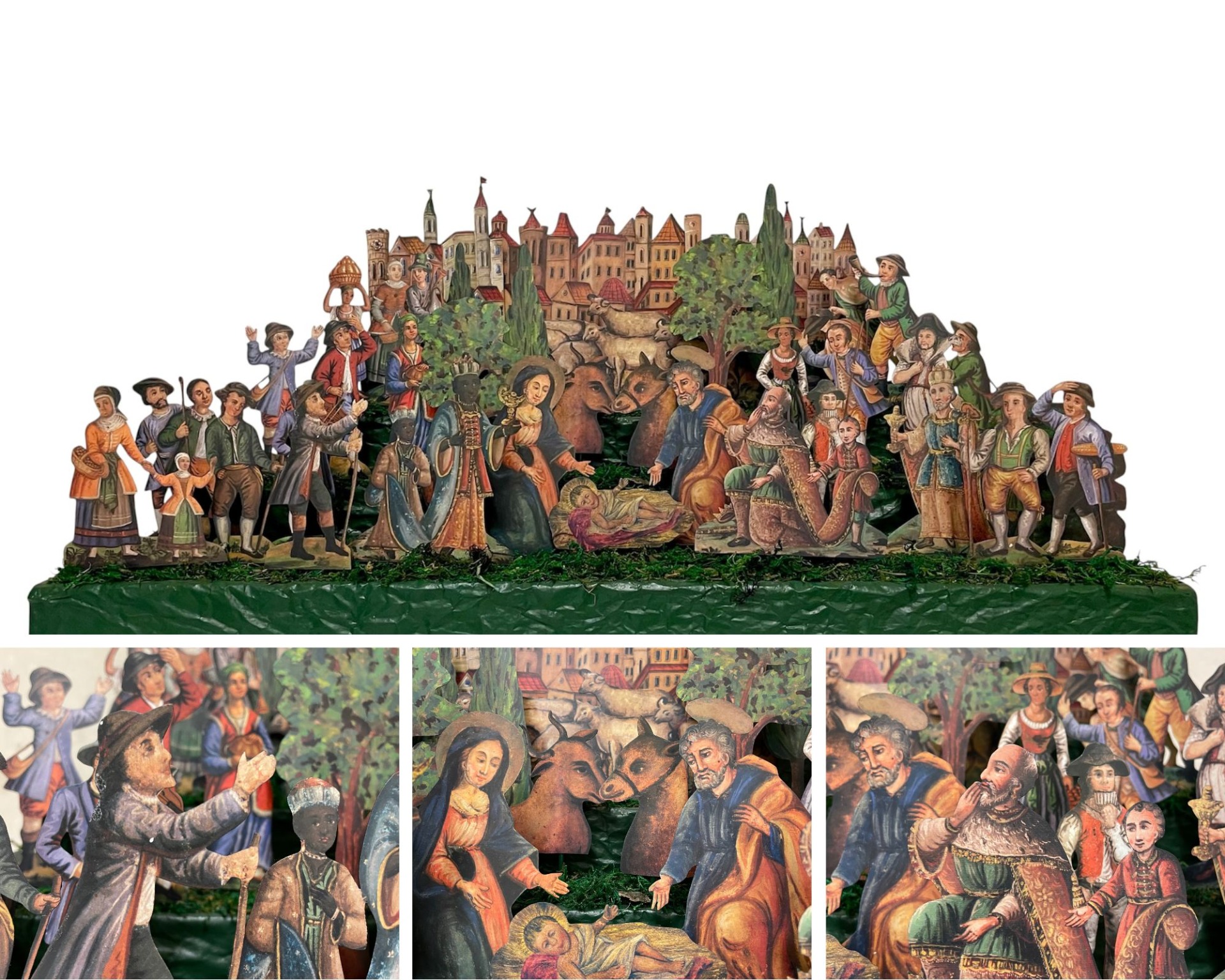
The Lodhéřov Paper Nativity Scene
consists of nearly thirty figures and architectural elements that are painted and arranged in a traditional composition. The nativity scene dates from the late 18th century and stands out for its elaborate architecture and spatial arrangement of buildings. It is unique for the freshness of its depiction of figures, its precise forms, and its vibrant coloring, which brings the scene of the birth of Jesus to life.
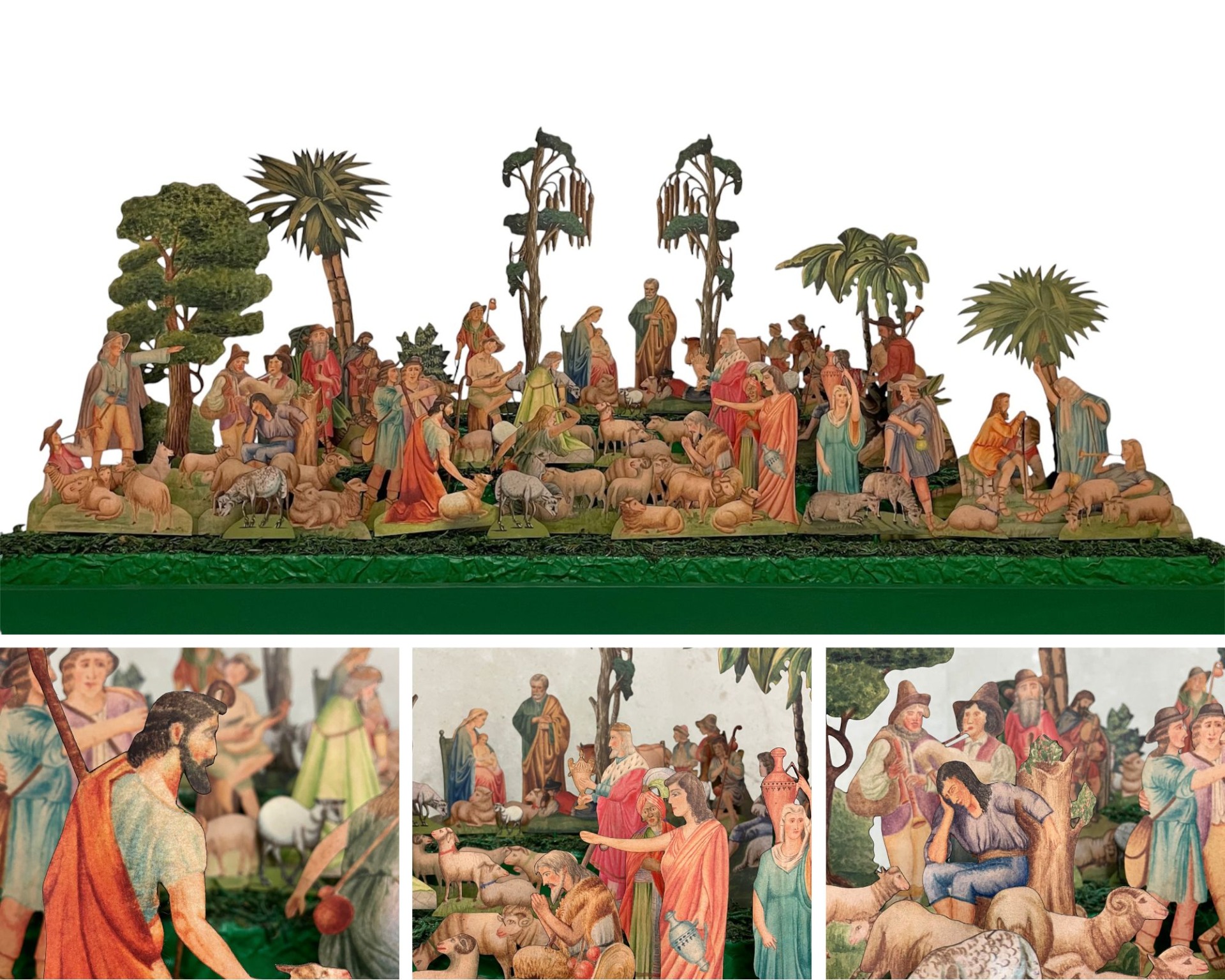
The Historical Paper Nativity Scene from Hrádek nad Nisou
depicts an opening scene with two tall trees, where the birth of Jesus takes place. The figures and architectural elements are precisely painted and arranged in a traditional composition typical of paper nativity scenes from this region. The nativity scene is valuable not only for its artistic quality but also for its historical significance, preserving the original form and style of nativity scenes from that period.
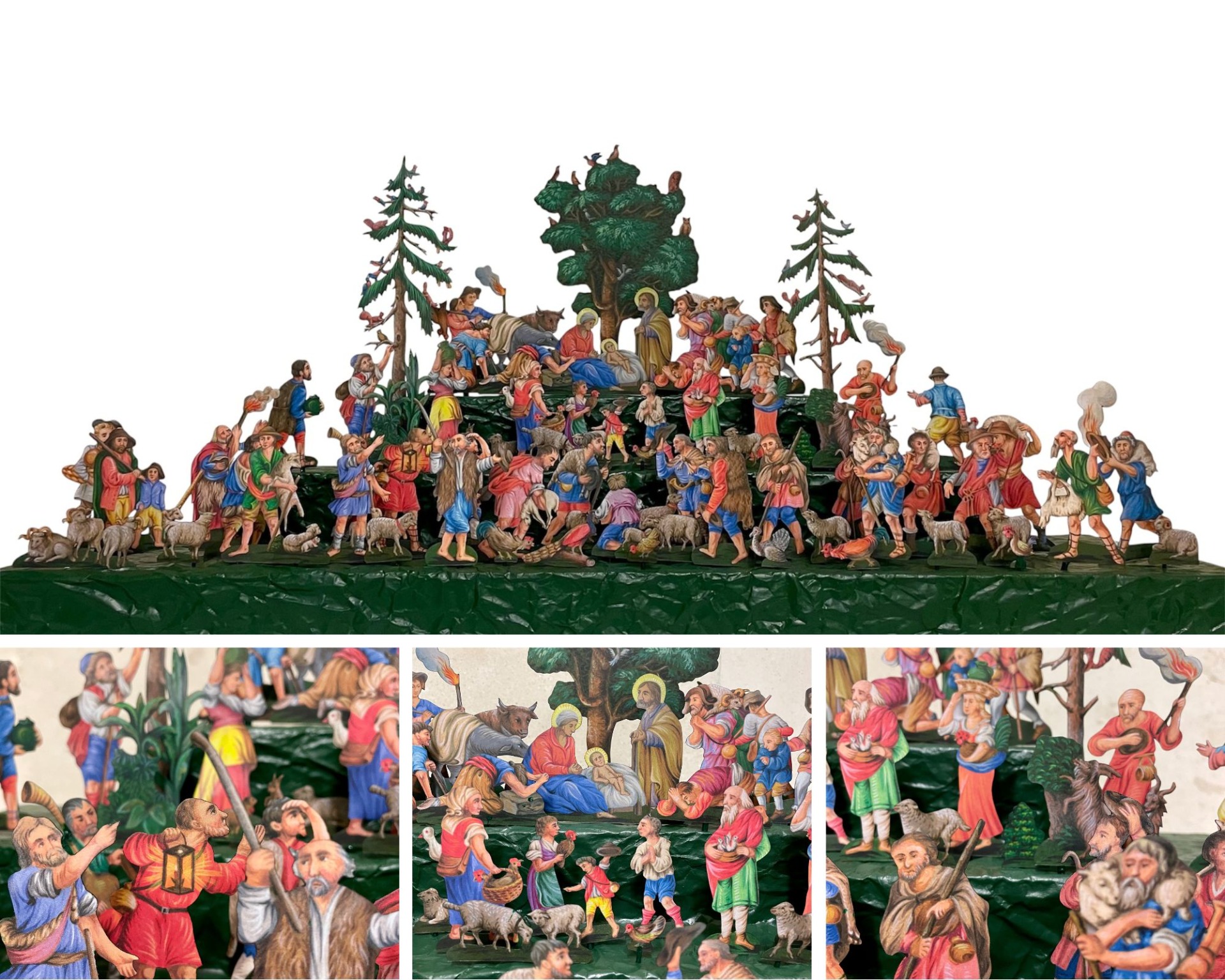
The Třebíč Paper Nativity Scene by Antonín Žamberský
depicts a scene with numerous figures and three dominant trees that form the central element of the composition. The nativity scene stands out for its rich coloring and delicate decorative treatment, highlighting the author's distinctive style. It is also significant for preserving the traditional paper craft and documenting the local cultural heritage.
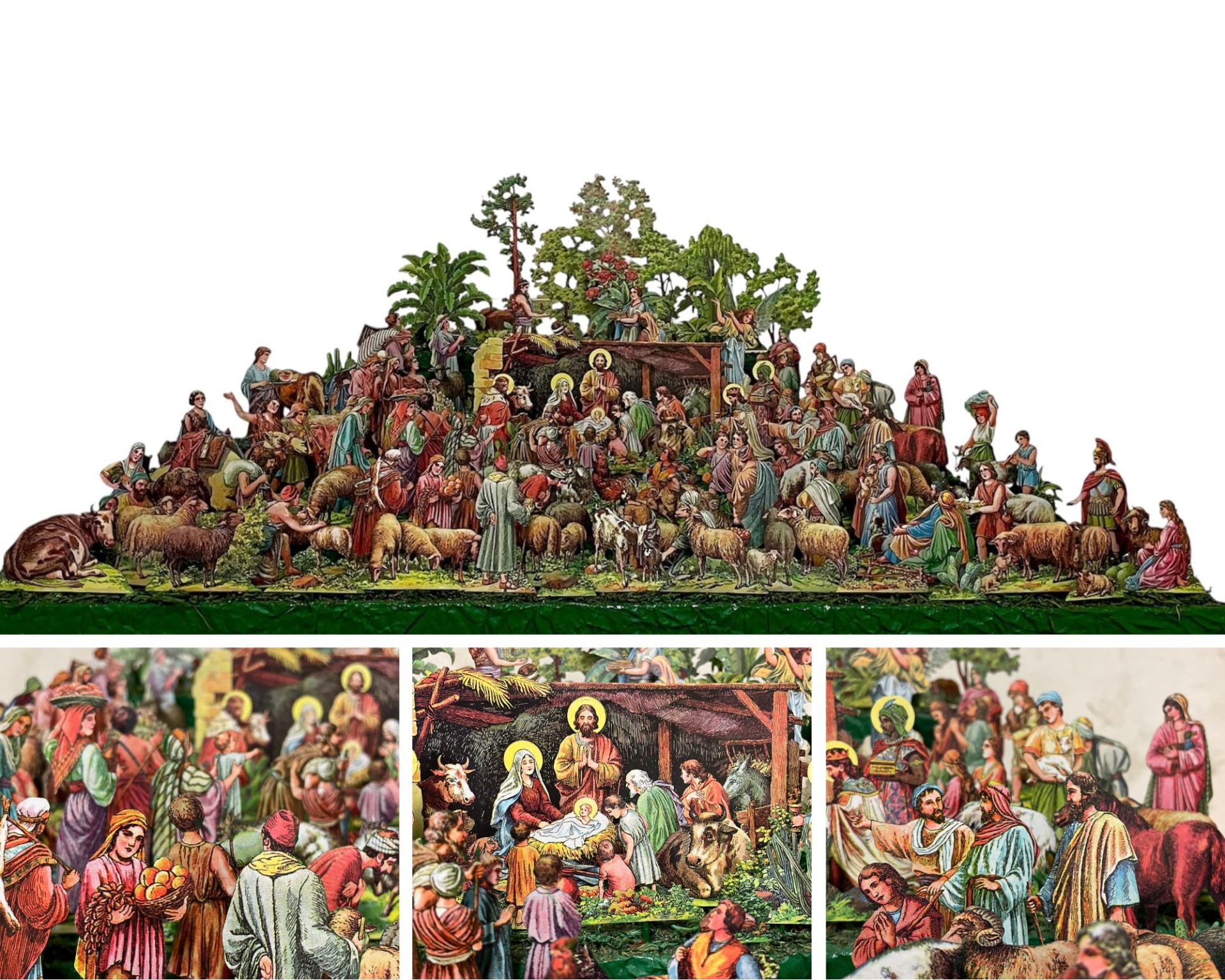
The Prague Paper Nativity Scene by Pavel Korber
contains up to 150 figures, making it one of the nativity scenes with the largest number of characters. It stands out for its detailed craftsmanship and complex scenery, capturing various figures and situations associated with the birth of Jesus. The nativity scene is valuable not only artistically but also historically, as it represents the work of an important Czech author from the late 19th century.
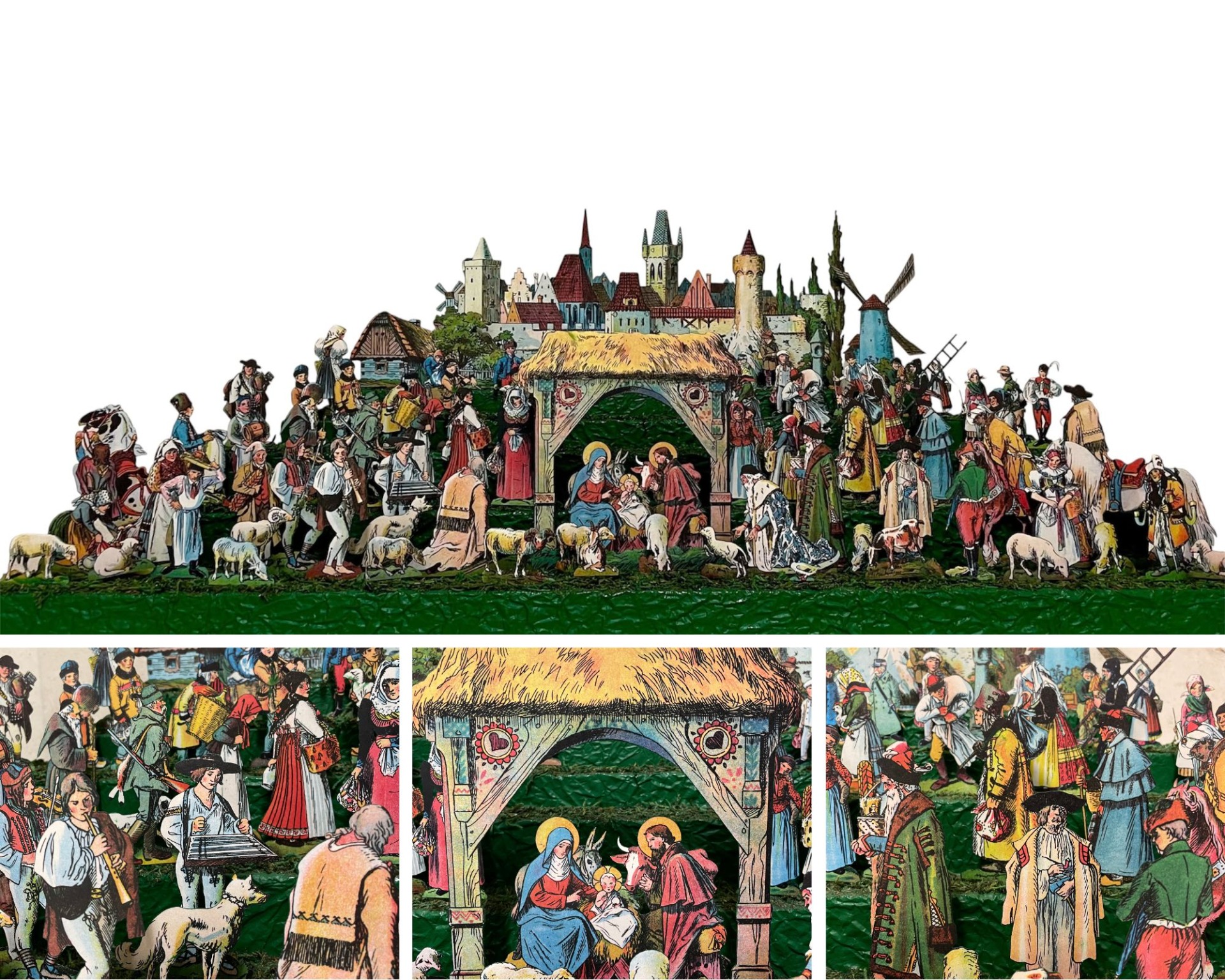
The Paper Nativity Scene by Mikoláš Aleš
depicts biblical scenes with finely crafted details and distinctive architecture of Old Prague buildings. It was created in 1902 and is unique for its artistic quality and characteristic Aleš style. This nativity scene is considered an important historical work and is often sought after by collectors.
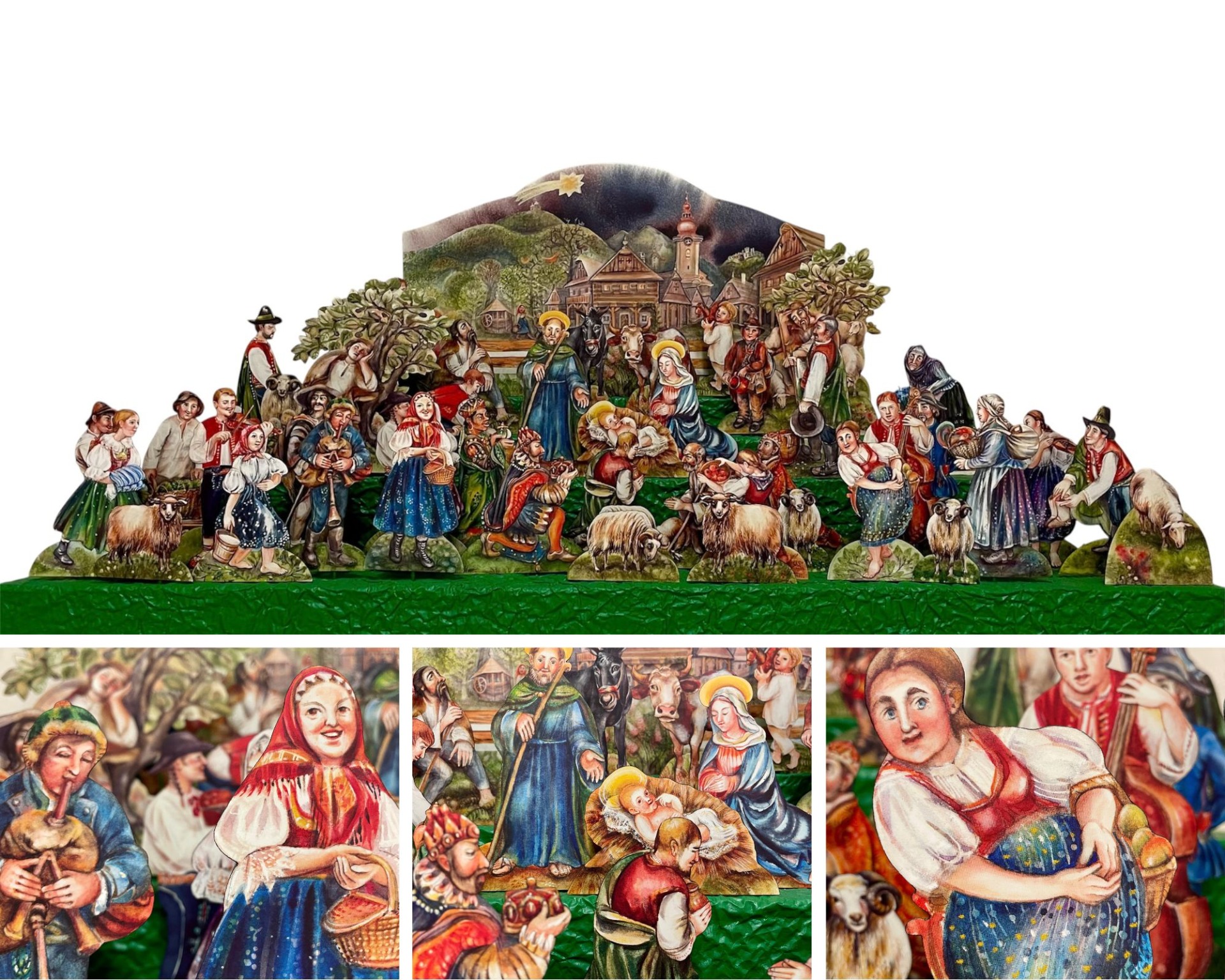
Carpathian Paper Nativity Scene
The Carpathian paper nativity scene is a finely detailed set featuring 38 painted figures, including animals. It depicts Baby Jesus, the Virgin Mary, Saint Joseph, shepherds, the Three Wise Men, and other characters, all inspired by traditional clothing and folkloric elements of the Carpathian region. Reproductions of watercolor paintings by Ludmila Vašková give the nativity scene a soft color palette and elegance, faithfully capturing the atmosphere of the Carpathians.
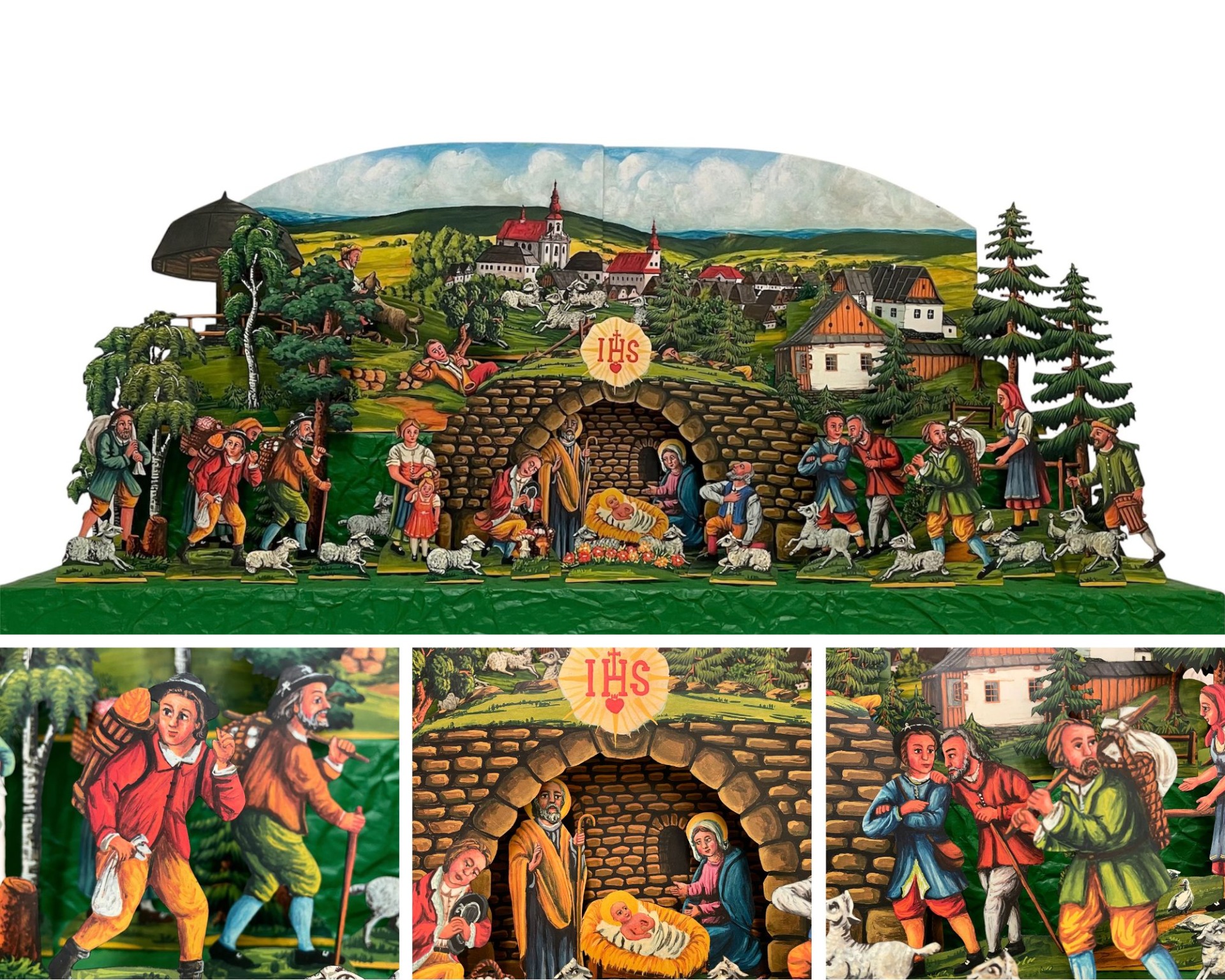
Orlickoústecký Nativity Scene by Jaroslav Herain
The Orlickoústecký nativity scene is a paper nativity set created by Czech artist Jaroslav Herain. It depicts the biblical story of the birth of Jesus set in the environment of the Orlickoústecko region. It stands out for its large number of detailed figures, architecture, and scenes from the everyday life of local people.
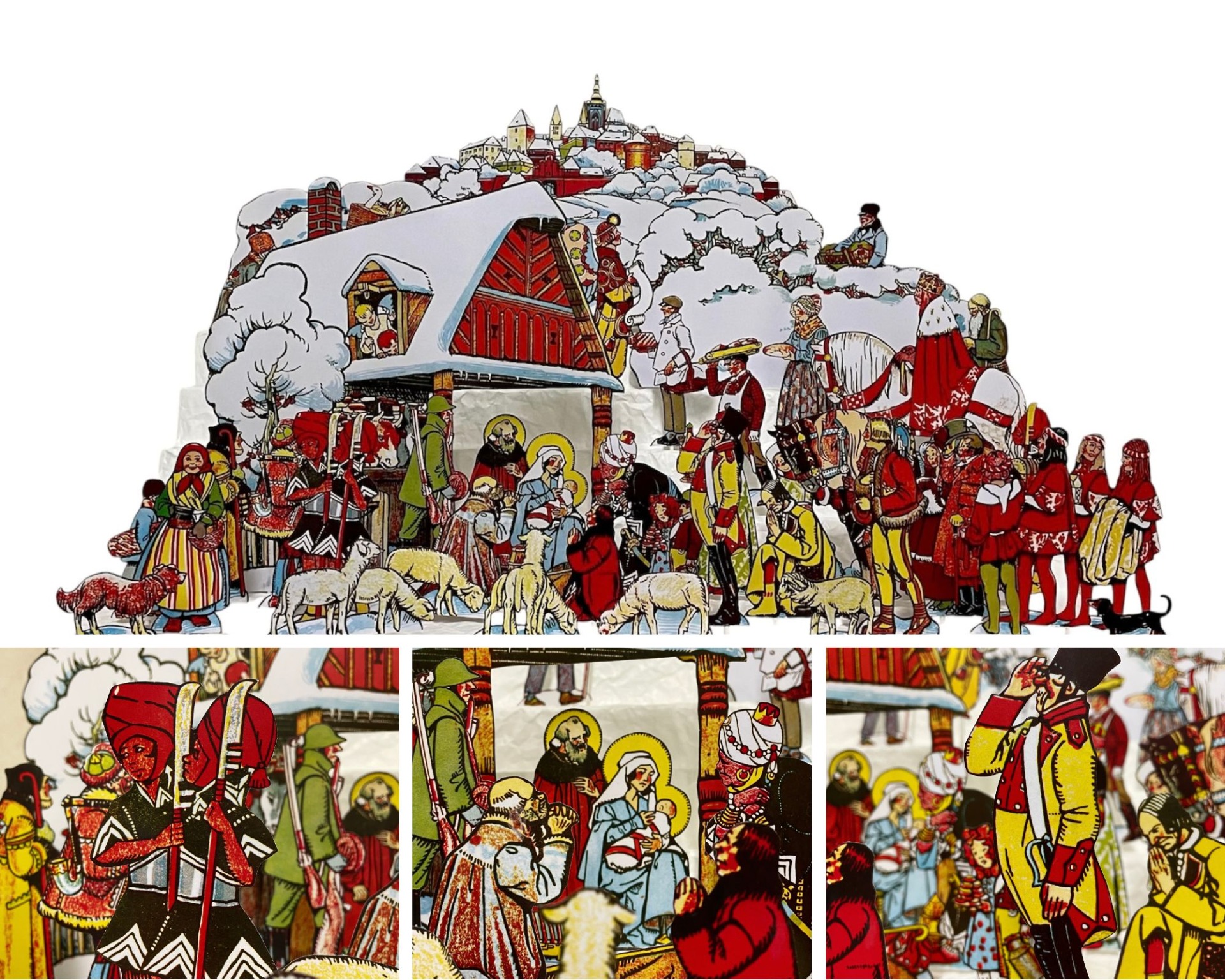
Prague Nativity Scene by Josef Wenig
The Prague nativity scene by Josef Wenig is a typically Czech folk nativity set that transfers the birth of Baby Jesus from Bethlehem to the setting of a small cottage beneath Hradčany at the end of the 19th century, with the unfinished St. Vitus Cathedral in the background. Figures of villagers, townspeople, and people of various social classes bring gifts dressed in traditional attire. In peace and togetherness, the Three Kings also join them, capturing the magical atmosphere of Christmas.
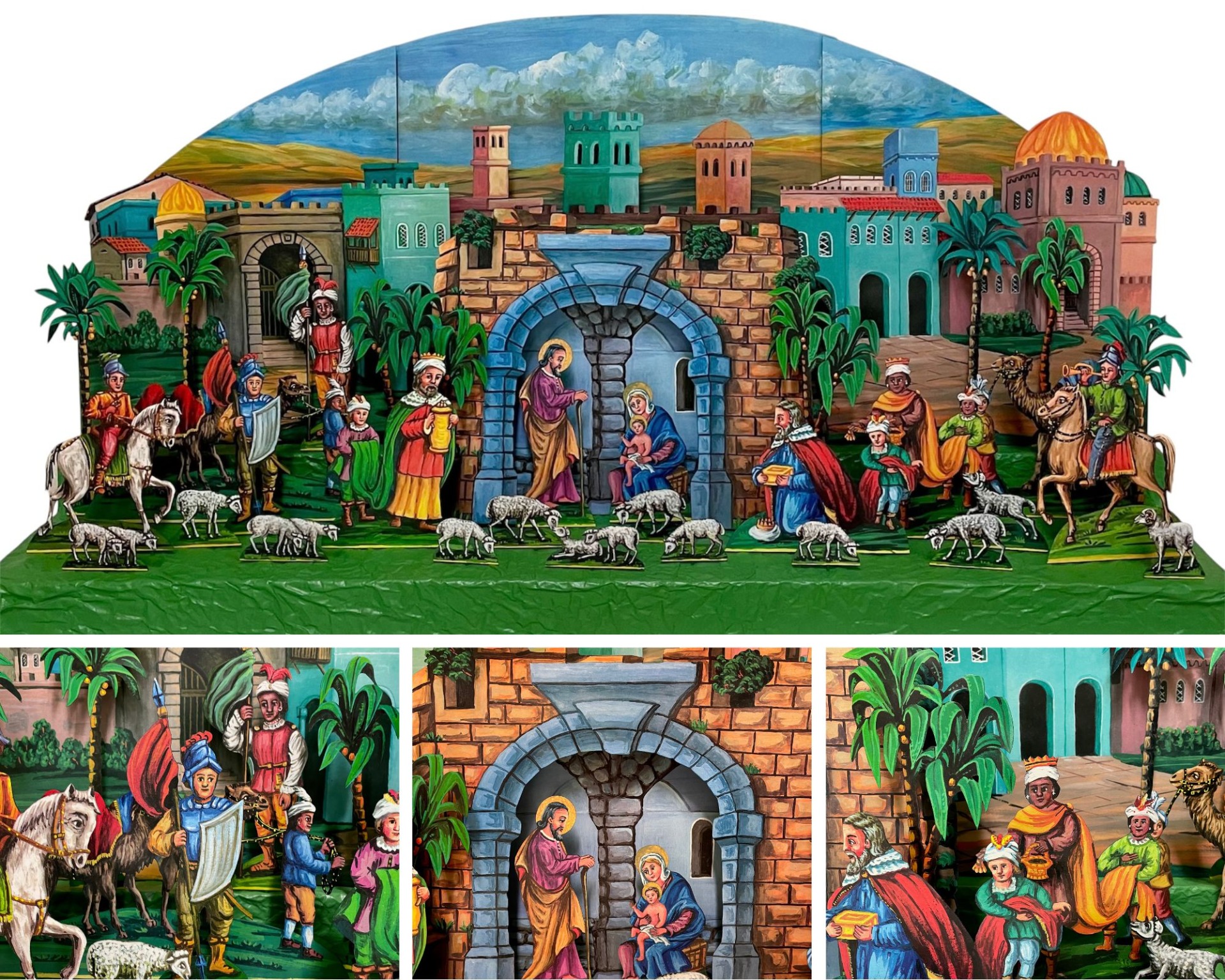
Three Kings Paper Nativity Scene by Jaroslav Herain
This paper nativity scene by Jaroslav Herain depicts the arrival of the Three Kings to the newborn Jesus. The scene is set in the city of Bethlehem and is dominated by its rich architecture, full of intricate details. The paper figures and buildings create an impressive composition reminiscent of a historic city.
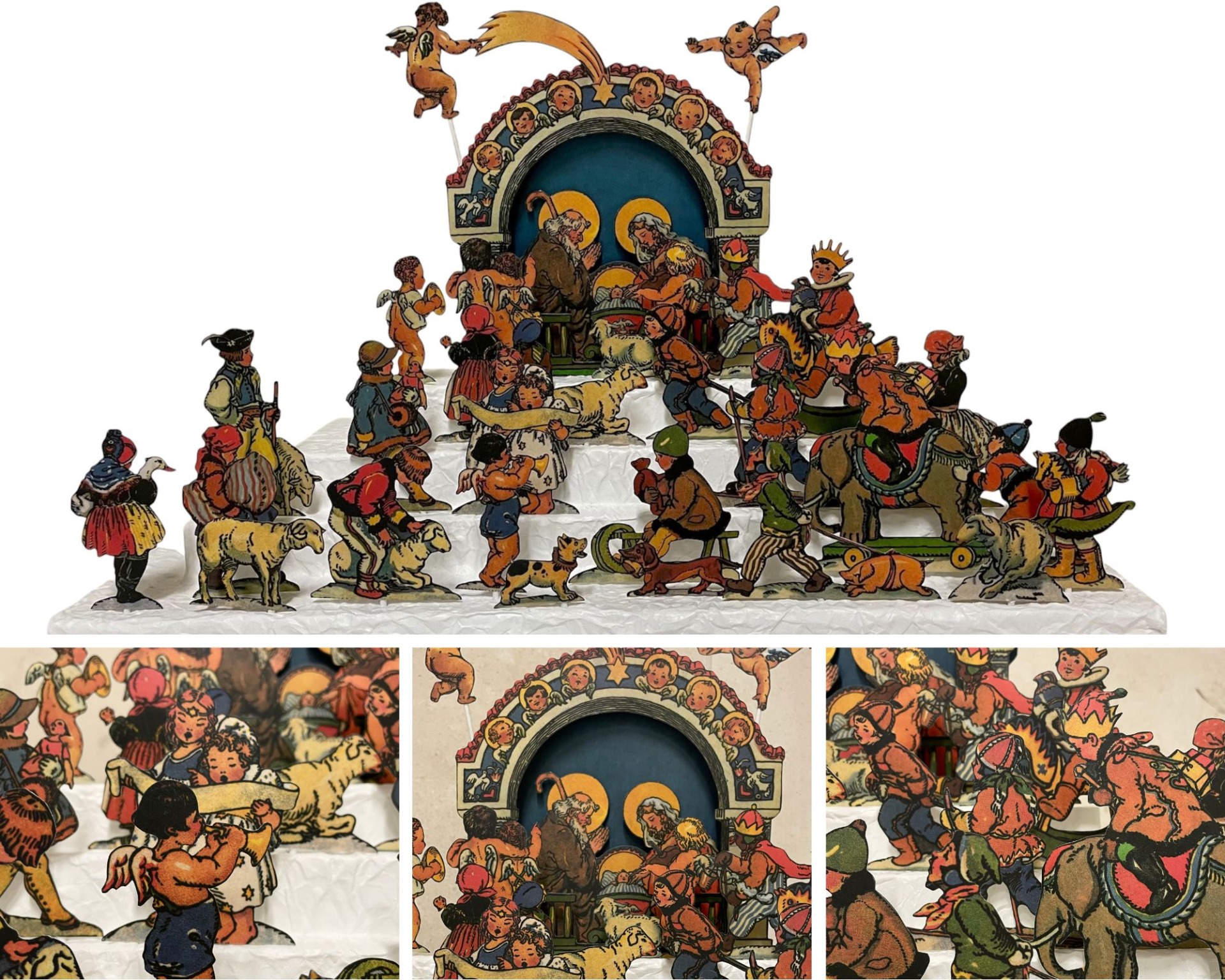
Traditional Christmas Nativity Scene by Marie Fischerová-Kvěchová
This traditional Christmas nativity scene by illustrator Marie Fischerová-Kvěchová is one of the popular paper nativity sets, known for its delicate, folk-inspired artistic style. It includes around 30 movable figures set in a მშვიდ winter landscape, creating a harmonious scene of the birth of Baby Jesus. The artist's signature style is traditional and gentle, sensitively capturing the atmosphere of Christmas.
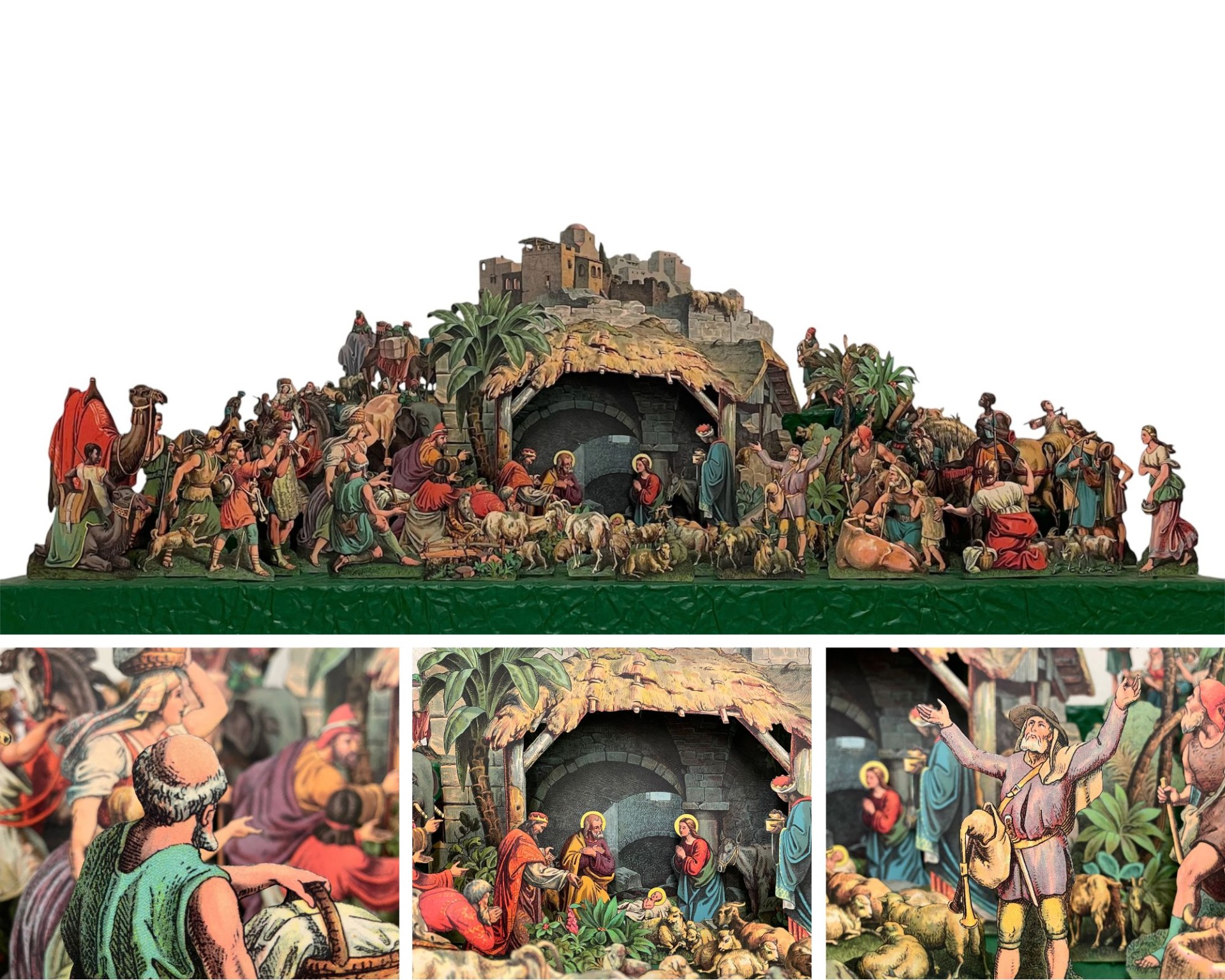
The Wörndle Christmas Nativity Scene
The Wörndle Christmas nativity scene is an original paper nativity created by Austrian painter Edmund von Wörndle. The scene of the birth of Jesus is set in a cave, above which the city of Bethlehem stretches out. This nativity scene stands out for its artistic quality, detailed figures, and richly composed city architecture.
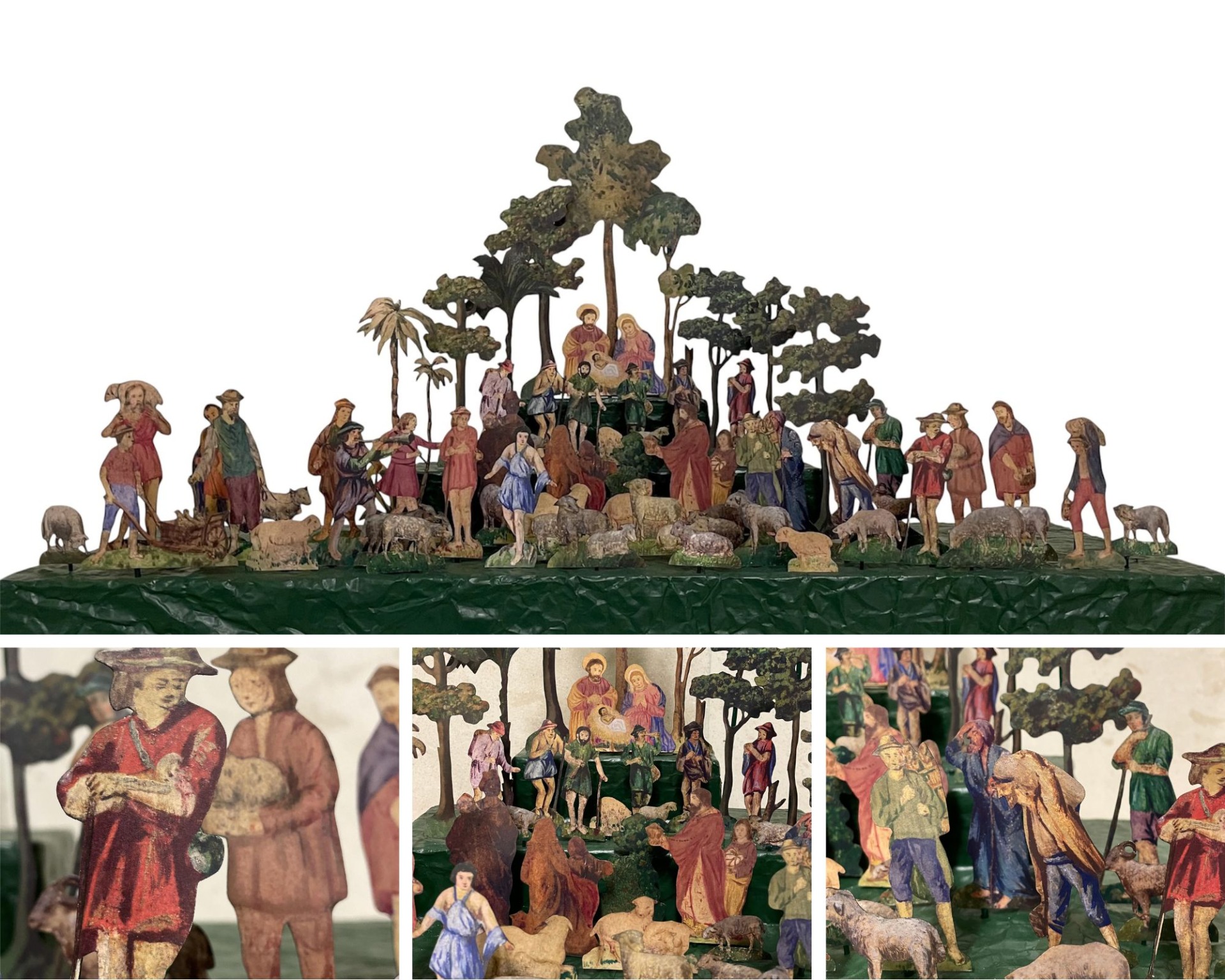
Historic Paper Nativity Scene from Jablonec nad Jizerou
This historic paper nativity scene from Jablonec nad Jizerou stands out for its striking central scene of the Nativity. It is compositionally emphasized by trees that frame it and draw attention to the center of the scene. The figures have a solemn appearance, reminiscent of sacred figurative representations.
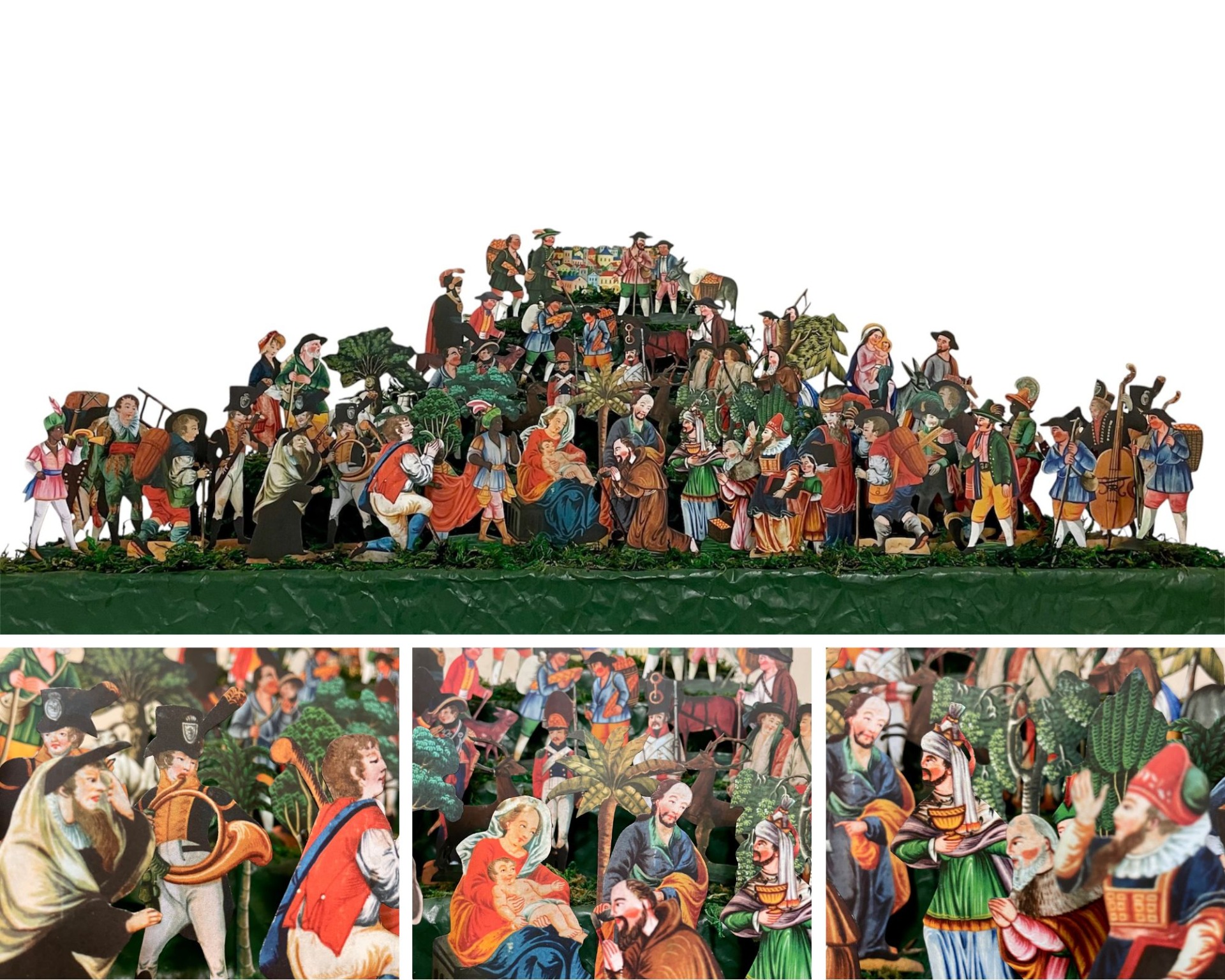
Historic Paper Nativity Scene
This historic paper nativity scene depicts a rich portrayal of the Birth of Christ, surrounded by numerous figures and scenes of everyday life. The central scene with the Holy Family is placed in the middle and is highlighted by trees and the landscape's terrain arrangement. Around them gather shepherds, musicians, travelers, and gift-bearers, creating a lively and colorful image of the traditional folk world.
